

Sustainability · 2025
In this section56 topics
- Sustainability Policy2 items
- Sustainability Goals & UN SDGs3 items
- Policy Review3 items
- Business Value Chain1 item
- Stakeholder Analysis2 items
- Environmental Policy & Guidelines3 items
- Environmental Policy Review3 items
- Energy Management — Overview1 item
- Energy — Plan & Guidelines2 items
- Energy — Electricity Consumption1 item
- Energy — Fuel Consumption1 item
- Energy — Targets2 items
- Energy — Performance & Outcomes2 items
- Water Management — Overview1 item
- Water — Plan & Guidelines2 items
- Water — Withdrawal, Discharge & Consumption1 item
- Water — Targets2 items
- Water — Performance & Outcomes2 items
- Waste Management — Overview1 item
- Waste — Plan & Guidelines2 items
- Waste — Generation, Disposal & Recycling1 item
- Waste — Targets2 items
- Waste — Performance & Outcomes2 items
- Greenhouse Gas — Overview1 item
- GHG — Plan & Guidelines2 items
- GHG — Emissions1 item
- GHG — Emissions Verification1 item
- GHG — Principles & Standards1 item
- GHG — Targets1 item
- GHG Targets — Net Zero1 item
- GHG Targets — Carbon Neutrality1 item
- GHG — Performance & Outcomes2 items
- Environmental Legal Incidents1 item
- Other Environmental Management2 items
- Social Policy & Guidelines3 items
- Social Policy Review3 items
- Social — Principles & Standards Practised1 item
- Human Rights Due Diligence3 items
- Employees — Plan & Guidelines3 items
- Employees — Workforce2 items
- Employees — Remuneration & Provident Fund2 items
- Employees — Training & Development2 items
- Employees — Occupational Health & Safety2 items
- Employees — Labour Relations2 items
- Employees — Employee Representation3 items
- Employees — Targets2 items
- Employees — Performance & Outcomes2 items
- Customers — Plan & Guidelines3 items
- Customers — Satisfaction Results2 items
- Customers — Targets2 items
- Customers — Performance & Outcomes2 items
- Community & Social — Plan & Guidelines3 items
- Community & Social — Targets2 items
- Community & Social — Performance & Outcomes2 items
- Other Social Management2 items
- Law Violation Incidents1 item
Sustainability Policy
Has a Sustainability Policy
Yes
Policy Description
Policy and Overview of Sustainable Business Operations
Thanasiri Group Public Company Limited is committed to delivering a good quality of life to residents sustainably, covering all dimensions: environmental, social, and economic, to meet the needs of stakeholders. The establishment of directions, strategies, and sustainable development policies serves as a crucial foundation for enhancing business operations to increase competitiveness and business credibility. The company has conducted a comprehensive assessment of risks and impacts of operations in each dimension to formulate relevant policies for sustainable operations, through review, consideration, and approval by top management. The policies that have been announced will be communicated and trained to employees, as well as published on the company's website, to ensure that all stakeholder groups can access these policies.
Environmental Dimension
The company focuses on environmentally friendly business operations and emphasizes sustainable energy management by carefully nurturing, maintaining, and utilizing various resources with maximum efficiency. It promotes waste management from production processes, encourages the valuable and proper use of existing resources, and seeks methods to reduce the consumption of various resources and energy to minimize wasteful resource use and reduce impacts on the environment, communities, and society. Concurrently, it instills a basic awareness among people in society and communities to coexist and utilize existing resources responsibly, thereby reducing both short-term and long-term environmental impacts in the future.
Social Dimension
The company recognizes the importance of creating a sustainable society by prioritizing society, communities, and all stakeholder groups fairly and equally. It promotes and develops the potential and capabilities of employees by supporting training and knowledge dissemination, as well as creating a safe working environment that stimulates creativity and allows them to work to their full potential and capacity. This also includes strengthening and developing society and various public benefits to improve the well-being and environment of communities within society.
Economic and Governance Dimension
Economic and governance development, by focusing on ethical, transparent, and fair core business operations in real estate development, is the responsibility of the Board of Directors, operating under good corporate governance principles. The company is committed to continuously improving the quality of products and services, including inventing and creating innovations that support product and service development, to cover and respond to the diverse needs of all customer groups. Furthermore, it promotes and supports business partners and stakeholders throughout the business value chain to conduct business according to sustainable development guidelines, as well as managing risks efficiently and effectively, to enable the organization to achieve its set goals.
Sustainability Goals & UN SDGs
Has Sustainability Goals
Yes
Goals Description
The company prioritizes and focuses on operating with responsibility towards the environment and society, while appropriately caring for stakeholders, in line with the organization's sustainable management guidelines. The company has adopted the principles of sustainable development (Triple Bottom Line), which emphasizes three components: economy, society, and environment, as a guideline for setting operational goals under the Total Green Real Estate Development – Service strategy. This strategy is responsible for impacts on stakeholders to maintain balance and foster stable growth. The business objectives for all three components are as follows:
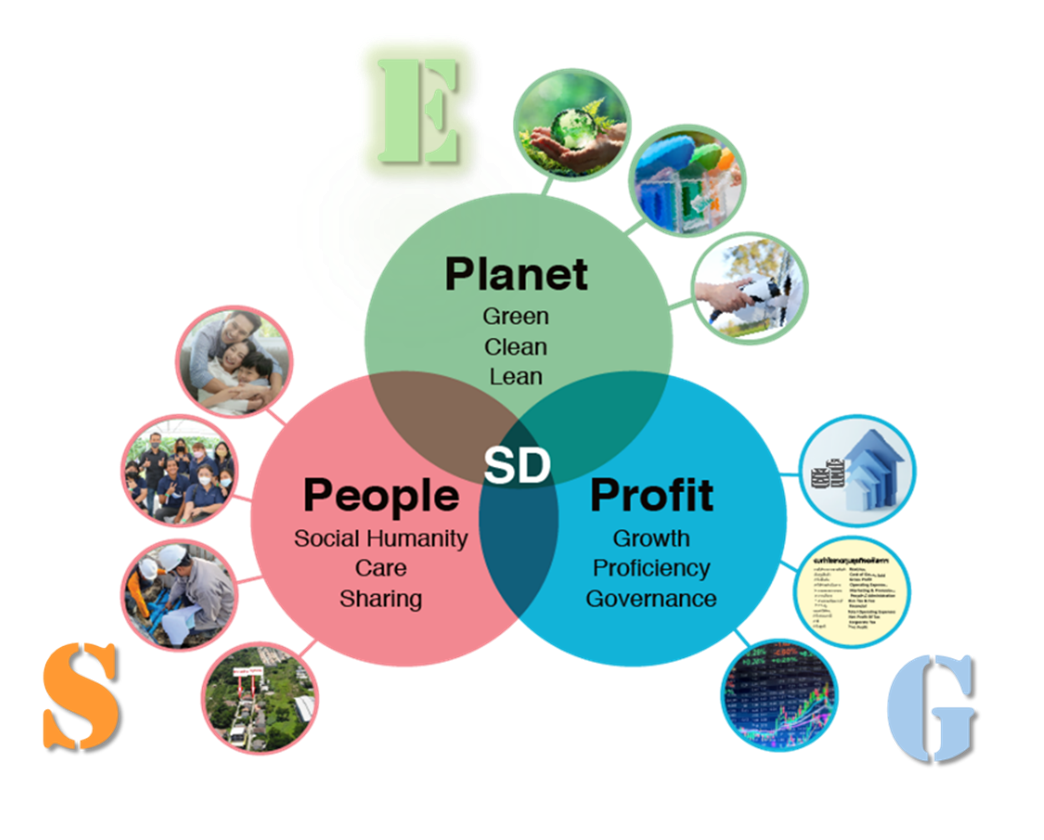
Environment (PLANET)
As a real estate development business operator, the company plays a role and creates impacts on the environment in various aspects. Therefore, it prioritizes environmental responsibility by reducing the impacts of project development during the process (in-process), from design to construction, as well as caring for the environment and quality of life of residents in the community and neighboring communities after handover. Environmental responsibility is designated as one of the operational strategies for both Project Management and Community Management, under the Green Clean Lean concept.
Society (PEOPLE)
The company always considers that business growth relies on a good, quality, and safe societal foundation. Therefore, the company's social responsibility is not limited to internal personnel but also extends to external society, including personnel of partners, customers, and residents in the projects, as well as the broader external society, such as neighboring communities, construction workers, and the overall social conditions of the country, under the concept of “Thanasiri...We Care”.
Governance (PROFIT)
A key economic objective of the company is to create a balance of reasonable and continuous returns or operating profits, based on good corporate governance, responsible business operations with transparency and disclosure, and considering the sharing of returns with all stakeholder groups.
Sustainable Operational Strategy (Total Green Real Estate Development – Service Model)
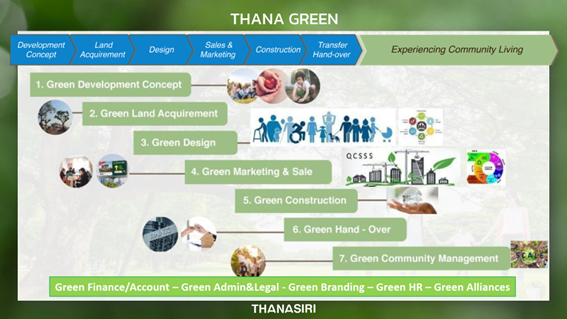
From the sustainable management goals based on the principles of sustainable development (Triple Bottom Line), a Total Green Real Estate Development - Service model has been developed. This model reflects the concept from the initial project development > land acquisition > product and project design > customer presentation > construction > handover > and welcoming homeowners into every project of the company, under the collaboration of all stakeholder groups. Customer satisfaction is continuously measured, along with a Community Management Team that oversees from the first home occupancy until all homeowners live within the project area. Details are as follows:
Green Development Concept: A project development concept aligned with creating a good quality of life, caring for the environment, and fostering a society of sharing.
Green Land Acquirement: Acquiring suitable land through a transparent process, considering the well-being of the original community that the company must care for.
Green Design: Designing in accordance with Green and Universal Design standards to meet the quality of life needs of all generations who will reside in the company's projects.
Green Marketing & Sale: Marketing and sales, communicating through the presentation of factual information and conditions that meet needs, ensuring fairness to customers and partners.
Green Construction: As this stage has the most significant impact on society and the environment, the company has established Green Construction standards that require controlling product quality to meet standards, managing costs appropriately, ensuring timely home delivery, maintaining the safety of all team members during construction and while homeowners reside, and caring for the surrounding society and environment during construction through appropriate management methods to minimize social and environmental impacts and achieve the highest quality.
Green Hand-Over: Delivering homes to customers according to the commitments made, focusing on transactions (retail loans) in accordance with government regulations, ensuring transparency and auditability.
Green Community Management: Community management by a community management team that oversees and coordinates to ensure the quality of life for homeowners meets the Passion initially presented by the company, under the Green Clean Lean concept and guidelines.
Green Support [Green Finance/Account, Green Admin&Legal, Green Branding, Green HR and Green Alliances]: The process of support units focused on managing energy and various resources to reduce greenhouse gas emissions and simultaneously save costs. This also includes communicating and building understanding of the THANA Green process to journalists, media, partners, contractors, financial institutions, etc., to inform them of the efficiency and effectiveness resulting from implementing the THANA Green process.
UN Sustainable Development Goals
| SDG Goal |
|---|
| Goal 1 No Poverty |
| Goal 3 Good Health and Well-being |
| Goal 4 Quality Education |
| Goal 5 Gender Equality |
| Goal 6 Clean Water and Sanitation |
| Goal 7 Affordable and Clean Energy |
| Goal 8 Decent Work and Economic Growth |
| Goal 10 Reduce Inequalities |
| Goal 12 Responsible Consumption and Production |
| Goal 13 Climate Action |
| Goal 15 Life on Land |
| Goal 16 Peace, Justice and Strong Institutions |
Policy Review
Policy Reviewed This Year
Yes
Policy Changed This Year
Yes
Review Details
The company regularly reviews its sustainability management policies and goals annually to align with various significantly changing factors, such as business growth, sustainability trends, and relevant laws and standards.
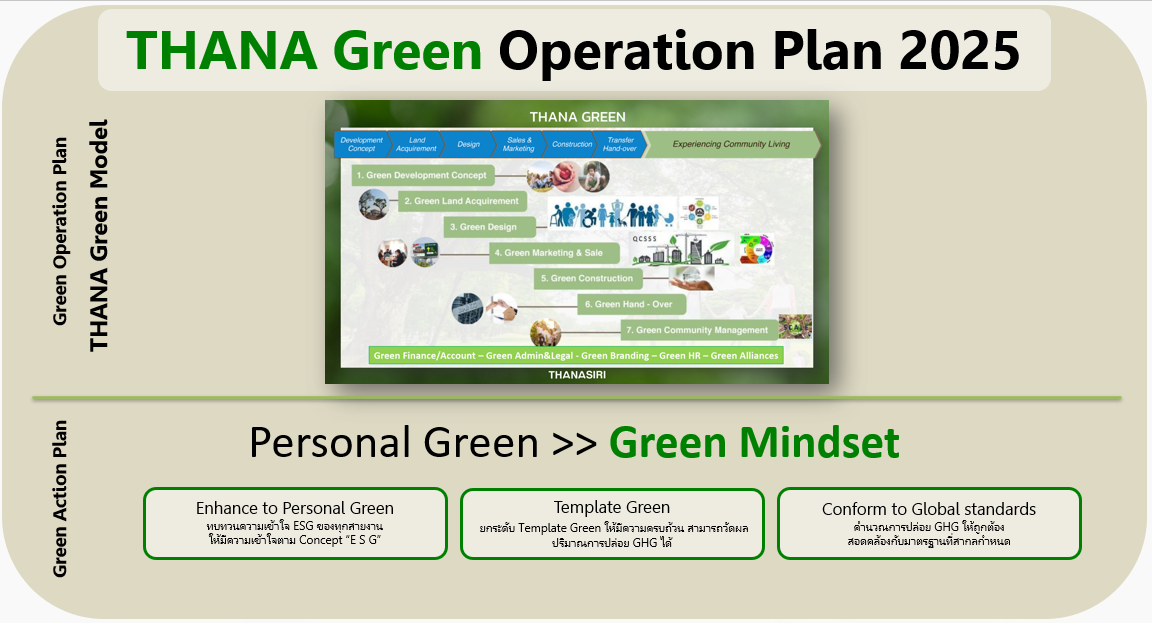
The company has set its sustainability management goals for 2025, focusing on fostering a "Green Mindset" among its team members to integrate sustainability management into the DNA of every employee, utilizing the "THANA Green" strategy to drive the achievement of the defined goals.
Business Value Chain
Value Chain Description
Key Processes in Real Estate Development
Generally, the responsibility of a real estate development company typically ends with the handover of homes to customers. However, the company recognizes the importance of caring for the quality of life of residents in its projects, who have placed their trust in purchasing homes under the "Thanasiri" brand. This led to the development of the "Thanasiri...We Care" after-sales service concept. Consequently, the company's responsibility towards its relevant stakeholders in its business operations, or its business value chain, begins at the policy level of internal organizational management, adhering to the Sufficiency Economy Philosophy which emphasizes integrated value creation in all sectors for sustainable development. It also prioritizes the use of data obtained from studies, research and development, and the application of technology for decision-making, based on good governance principles that consider all stakeholder groups throughout the company's main real estate development processes, which include:
|
Steps |
Process |
Stakeholders |
|
Land Acquisition and Funding Green Land Acquirement |
|
|
|
Design and Project Development Preparation Green Design |
|
|
|
Sales and Marketing Green Marketing & Sale |
|
|
|
Project Construction Green Construction |
|
|
|
Delivery and Transfer of Ownership to Customers Green Hand Over |
|
|
|
Community Management and Services Green Community Management |
|
|
Stakeholder Analysis
Introduction
The company conducts its business with consideration for stakeholders involved in both internal and external roles throughout the business value chain. This is done to assess the level of importance of stakeholders and their direct and indirect impacts on the company, and to establish guidelines for responding to expectations and fostering engagement among each stakeholder group. The aim is to effectively address all groups through an analysis of their needs and expectations, as well as the implementation of actions to meet the expectations of each stakeholder group, as follows:
Stakeholder Analysis
| Stakeholder Type | Stakeholders | Stakeholder Expectations | Response to Expectations | Communication Activities |
|---|---|---|---|---|
| External stakeholders | 2923 · Description: Customers · 2924 · Description: Residents | Receiving quality products and services at a reasonable price - Timely delivery of work - Transparency throughout the work process - Compliance with laws and professional ethics - Communication channels, prompt and quality response to complaints - Customer relationship management - Risk and crisis management | - Operate professionally according to international standards - Provide services focused on achieving maximum customer satisfaction - Develop work processes for maximum efficiency - Strictly and fairly adhere to all terms and conditions - Operate under an anti-corruption policy - Regularly survey customer satisfaction | 2940 · Description: Social Event · 2941 · Description: Online Communication · 2945 · Description: Complaint Reception · 2947 · Description: Satisfaction Survey |
| Internal stakeholders | 2921 · Description: Employees | - Stable compensation and benefits covering the family - Career advancement and job security - A good and safe working environment - Continuous knowledge development and digital technology skills - Fair treatment - Equality and fundamental rights - Receiving communication on company policies and processes | Develop compensation and benefits - Policy on safety, occupational health, and environment - Develop employee career advancement plans - Develop training plans for all levels of employees - Human rights policy - Communicate policies and various processes via the company's SharePoint - Employee satisfaction assessment regarding the organization | 2941 · Description: Online Communication · 2942 · Description: Internal Meeting · 2945 · Description: Complaint Reception · 2946 · Description: Employee Engagement Survey · 2948 · Description: Training / Seminar |
| External stakeholders | 2904 · Description: Investors or investment institutions · 2913 · Description: Shareholders | Dividend payment according to policy - Good corporate governance - Continuous growth - Transparent disclosure of information - Channels for expressing opinions - Opportunity for minority shareholders to propose agenda items, nominate directors, and submit questions before the shareholders' meeting - Equal treatment of shareholders - ESG information disclosure - Effective risk management | - Return on investment - Good corporate governance - The company's performance has grown continuously - Adheres to good disclosure principles - Communicates through the company's investor relations - Complies with shareholder rights - Treats all shareholders equally - Disclosed in the annual information statement (56-1 One Report) | 2939 · Description: Press Release · 2941 · Description: Online Communication · 2944 · Description: Annual General Meeting (AGM) · 2949 · Other name: 56-1 One Report, Investor Meetings · Description: Others |
| Internal stakeholders | 2899 · Description: Suppliers | Continuous ordering - Concurrent business growth - Fair and transparent operations | Build trust with partners through efficient and standardized operations. Develop and expand the business base for continuous and potential growth. Strictly and fairly adhere to various terms and contracts. Treat partners equally, transparently, and fairly, without soliciting, accepting, or receiving any assets or other benefits. Operate under an anti-corruption policy. | 2941 · Description: Online Communication · 2942 · Description: Internal Meeting · 2945 · Description: Complaint Reception |
| Internal stakeholders | 2918 · Description: Contractors · 2936 · Other name: Creative worker · Description: Others | - Continuous employment - Fair compensation - Workplace safety - Fair and transparent selection and evaluation - Communicate and understand customer needs and expectations - Clear job application procedures - Provision and maintenance of worker accommodation areas/environments | Operate professionally in accordance with international standards - Transparent and clear contracts and terms of engagement - Treat designers / contractors equally - Operate under an anti-corruption policy - Establish safety and occupational health systems for operations and residency | 2938 · Description: Visit · 2941 · Description: Online Communication · 2942 · Description: Internal Meeting · 2945 · Description: Complaint Reception · 2947 · Description: Satisfaction Survey · 2949 · Other name: QCSSS Construction Operational Strategy, Activities for enhancing the quality of life of construction workers in collaboration with Baan Dek Foundation · Description: Others |
| External stakeholders | 2902 · Description: Community · 2928 · Description: Society | - Environmental operations comply with various laws/regulations - Business operations support communities and society - Conduct construction safely, minimizing impact on communities - Demonstrate social responsibility - Consider environmental and natural resource impacts in the areas of operation - Preserve biodiversity in project development areas - Instill awareness among employees regarding social and environmental responsibility | - Survey community needs or impacts - Build good relationships between community members and agencies - Operate professionally according to international standards - Systematically manage environmental and safety aspects - Organize activities to disseminate knowledge and understanding to community members - Implement various sustainability projects covering economic, social, and environmental aspects to contribute to the sustainable development of the community - Provide assistance, support, and promotion to various communities through projects and activities | 2938 · Description: Visit · 2941 · Description: Online Communication · 2945 · Description: Complaint Reception |
| External stakeholders | 2931 · Description: Government agencies and Regulators | Comply with legal requirements/regulations as prescribed by government agencies. Social and environmental responsibility. Cooperate with government agencies upon request. Conduct business with transparency and good governance. Strictly adhere to the requirements of the Stock Exchange of Thailand. Respect for human rights. | - Comply with legal requirements and regulations - Study laws related to the business - Report operational performance through the annual information statement 56-1 One Report - Corporate governance policy and business ethics - Comply with regulations set by the Stock Exchange of Thailand - Respect for human rights | 2940 · Description: Social Event · 2941 · Description: Online Communication |
| External stakeholders | 2925 · Description: Financial institution | Repaying debts on time - Strict compliance with various conditions - Risk management | Conduct business with transparency and fairness, in accordance with good governance principles. Comply with contracts and relevant laws regarding debt repayment. Regularly analyze and review organizational risks to prepare appropriate risk prevention measures. | 2938 · Description: Visit · 2941 · Description: Online Communication · 2943 · Description: External Meeting |
| External stakeholders | 2929 · Description: Media | Received information from the company for public dissemination. | Project Launch - Company Operational Plan - Company Performance - Various Activities | 2938 · Description: Visit · 2939 · Description: Press Release |
| External stakeholders | 2924 · Description: Residents | Product and Service Value Customer Satisfaction and Complaint Management Respect for Consumer Rights Fostering a Culture of Living Promoting Participation in Social Activities | Contribute to creating a good quality of life and fostering positive relationships among residents through various ongoing activities. | 2940 · Description: Social Event · 2941 · Description: Online Communication · 2947 · Description: Satisfaction Survey |
Environmental Policy & Guidelines
Has an Environmental Policy
Yes
Policy Description
Thanashiri Group Public Company Limited has established clear policies and guidelines for conducting business with social and environmental responsibility across all operational processes, in accordance with international sustainability principles (Triple Bottom Line: 3P), namely Planet, People, and Profit. These principles are integrated into a strategy called "Total Green Real Estate Development - Service Model: THANA Green," which encompasses environmental and social responsibility throughout the entire operational process.
Environmental Practices
Environmental responsibility is one of the company's crucial duties, as the real estate development business relies on natural resources and energy to create its products and services. To ensure efficient environmental management, the company has established legally referenced guidelines for personnel and relevant stakeholders. These guidelines define the scope of environmental considerations, divided into the company's internal environment and the environment within projects or surrounding communities where the company develops projects, with cooperation from all stakeholder groups, including personnel, customers, partners, and alliances, to address the prevention and reduction of overall environmental impacts. The practices are as follows:
-
The company integrates environmental policies into its business operations, from procurement, production, and delivery of goods and services to waste disposal.
-
The company establishes an environmental management system as an integral part of its business operations, including continuous development and assessment of the management system, to enhance environmental performance.
-
The company established a Sub-Committee on Corporate Governance and Sustainable Development to oversee social and environmental responsibilities, monitor, control, and supervise operations in accordance with policies, and define clear charters.
-
The company strictly adheres to environmental laws and regulations. The THANA Green strategy serves as a tool for overseeing operations to mitigate environmental impacts and strive towards becoming a Net-Zero organization.
-
The company establishes policies for resource management, such as electricity and tap water, sets targets, and allocates resources appropriately to minimize waste and maximize the efficient use of existing resources, while continuously monitoring and evaluating resource consumption.
-
The company discloses its organizational greenhouse gas emissions and establishes guidelines and targets for reducing greenhouse gas emissions.
-
The company defines guidelines for waste (garbage) and pollution management, and consistently communicates, educates, and fosters employee participation in waste management.
Environmental Guidelines
| Guideline |
|---|
| Electricity Management |
| Fuel Management |
| Renewable/Clean Energy Management |
| Water Management |
| Waste Management |
| Biodiversity Management |
| Greenhouse Gas and Climate Change Management |
| Air Quality Management |
| Noise Pollution Management |
Environmental Policy Review
Policy Reviewed This Year
Yes
Review Details
The company has established environmental operational goals to balance business development and reduce environmental impact through its policy on community, social, and environmental responsibility. This is achieved by recognizing the importance of climate management, biodiversity conservation, and resource utilization, with a focus on waste management processes in construction. Guidelines have been set to appropriately reduce the loss of construction materials and to manage construction waste to maximize its value, as well as to minimize environmental impact. Furthermore, by collaborating with reliable business partners and selecting environmentally friendly construction materials, they have jointly established directions for managing construction materials within projects. This includes developing construction materials that can help minimize construction waste from the outset, as well as enabling the reuse of leftover materials for further benefit.
The core of the organization's short-term and long-term environmental management goals focuses on the collective cooperation of all employees, adhering to the 3 Rs principles (Reduce, Reuse, Recycle) – or "Use and Reuse + Reduce Usage + Recycle." This starts with methods for waste reduction, value creation, and reuse, transforming traditional paper-intensive practices towards the adoption of modern technology to be environmentally friendly for continuous sustainable business operations.
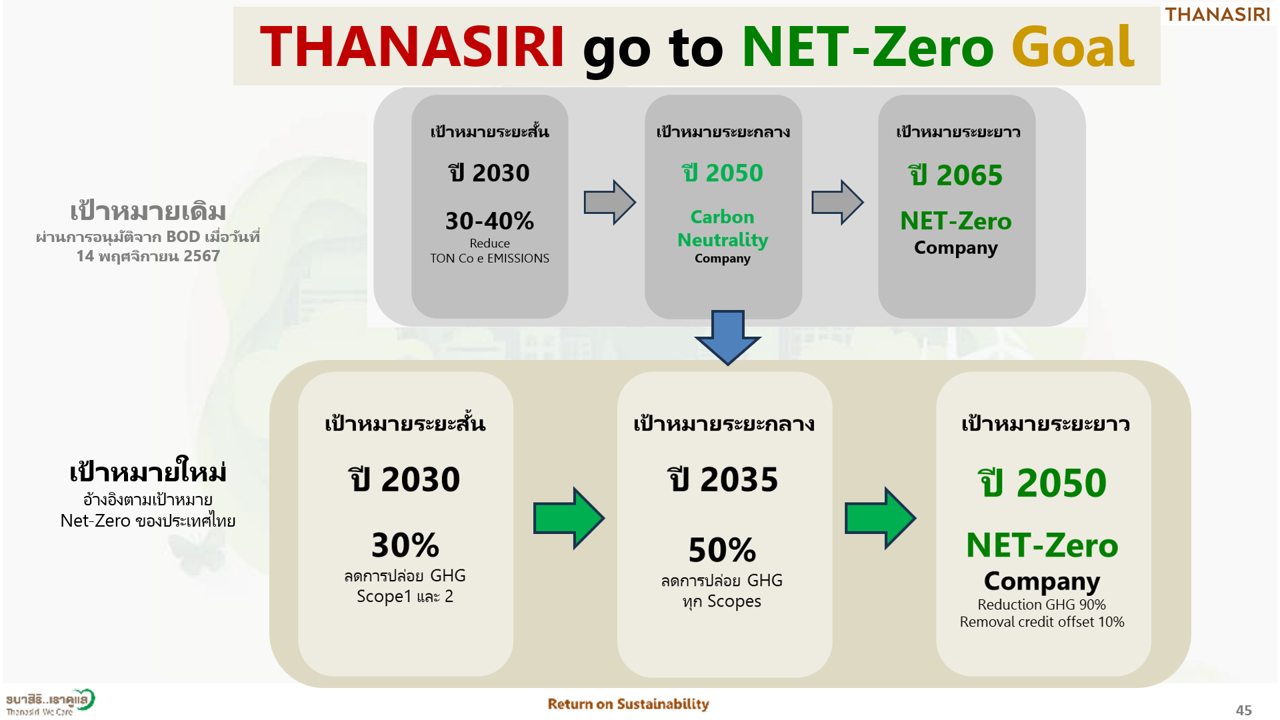
In 2025, Thailand revised its Net-Zero target from the original year B.E. 2608 (2065 A.D.) to B.E. 2593 (2050 A.D.). Therefore, to align with Thailand's national target, the Board of Directors resolved to approve the adjustment of the company's Net-Zero target as proposed by the Corporate Governance and Sustainable Development Committee, in order to enhance operational efficiency in accordance with the company's environmental policy, as follows:
Policies & Guidelines Changed
| Change |
|---|
| Electricity Management |
| Fuel Management |
| Renewable/Clean Energy Management |
| Water Management |
| Waste Management |
| Greenhouse Gas and Climate Change Management |
Energy Management — Overview
Introduction
The company utilizes electricity and fuel for its business operations. Therefore, campaigns have been launched to conserve electricity within the company's head office building and project offices, as well as to reduce fuel consumption. This initiative aims to foster awareness and consciousness among employees regarding energy conservation, achieved through the creation of public relations signs and various digital media, along with energy-saving competitions among different departments of the company, to encourage all employees to participate and collectively reduce energy consumption.
Energy — Plan & Guidelines
Has an Energy Management Plan
Yes
Plan Description
The company has established guidelines and plans for energy management to align with the organization's environmental policy, aiming to reduce electricity consumption, decrease fuel consumption, and mitigate greenhouse gas emissions within the organization.
Energy — Electricity Consumption
Electricity Consumption
| Metric | Current Year | Previous Year | Two Years Ago |
|---|---|---|---|
| Total electricity consumption within the organization (Kilowatt-Hours) | 58,124 | 73,143 | 59,675 |
| Electricity purchased for consumption from non-renewable energy sources (Kilowatt-Hours) | 58,124 | 73,143 | 59,675 |
| Electricity purchased or generated for consumption from renewable energy sources (Kilowatt-Hours) | 0 | 0 | 0 |
Energy — Fuel Consumption
Fuel Consumption
| Metric | Current Year | Previous Year |
|---|---|---|
| Crude oil (Barrels) | ||
| Coal (Metric tonnes) | ||
| Jet fuel (Litres) | ||
| Diesel (Litres) | 1,020 | 1,060 |
| Gasoline (Litres) | 13,466 | 13,921 |
| Fuel oil (Litres) | ||
| Natural gas (Standard cubic feet) | ||
| LPG (Kilograms) | ||
| Steam (Metric tonnes) |
Energy — Targets
Has Set Targets
Yes
Targets
| Target | Base Year | Base Year Value | Target Year | Target Change (%) | Unit |
|---|---|---|---|---|---|
| Reduction of electricity purchased for consumption | 2,025 | 58,124 | 2,026 | 20 | Kilowatt-hour |
| Reduction of fuel consumption | 2,025 | 14,486 | 2,026 | 5 | Litres |
Energy — Performance & Outcomes
Has Performance Results
Yes
Performance Description
Annual Energy Management Performance Results for 2025
Electrical Energy Management
Electricity consumption at the head office totaled 58,124 units, a 20% decrease compared to 2024, which aligns with the target to reduce electricity consumption at the head office to be less than that of 2024.
The company prioritizes efficient electrical energy management across all organizational business processes, as part of its commitment to achieving net-zero greenhouse gas emissions. This is accomplished through educational initiatives, awareness campaigns involving employees, and the selection of environmentally friendly equipment, all of which contribute to reducing electricity consumption.
The company has implemented electricity consumption management measures at the head office and projects as follows:
Head Office
-
Transitioning to LED (Light Emitting Diode) bulbs instead of fluorescent lamps, such as for lighting within office buildings, to conserve electrical energy. Small, low-power LED bulbs have a long lifespan and low heat emission, which can reduce electricity costs by up to twice that of conventional bulbs and contain no hazardous substances affecting humans and the environment.
-
Maintenance plan for regular cleaning of in-building electrical systems and electrical appliances to ensure optimal performance, safety, reduce electricity consumption from repairs, and prevent potential damage to the electrical system and business losses.
-
Public relations efforts encourage turning off air conditioners 30 minutes before closing time and promoting the switching off of all electrical switches when not in use and after working hours in office buildings.
Projects
-
Electricity usage within construction areas must comply with regulations and permits from the electricity authority.
-
Installation of various electrical equipment within construction areas must comply with standards. Campaigns are conducted to promote electricity conservation, such as turning off lights or appliances when not in use.
-
Establishing energy-saving electricity usage measures from the project's inception, including the design and installation of energy-efficient light bulbs and fixtures.
-
Supplementary measures are implemented for energy saving, such as controlling the switching off of unnecessary lighting and designing to maximize the utilization of natural sunlight in various areas.
-
Installation of solar-powered lights in the common garden area within the project to utilize solar energy in the common garden at night.
-
Utilization of renewable energy through the installation of solar panels (Solar Cell) at sales offices, clubhouses, kiosks, guardhouses, signs at the project entrance, as well as show houses, to harness solar energy within the project areas.
-
Installation of backup power for emergency use.
-
Building design and installation of materials and equipment within the building to promote energy conservation.
-
Campaigns are conducted to promote understanding among homeowners regarding energy-saving methods, along with various incentive measures.
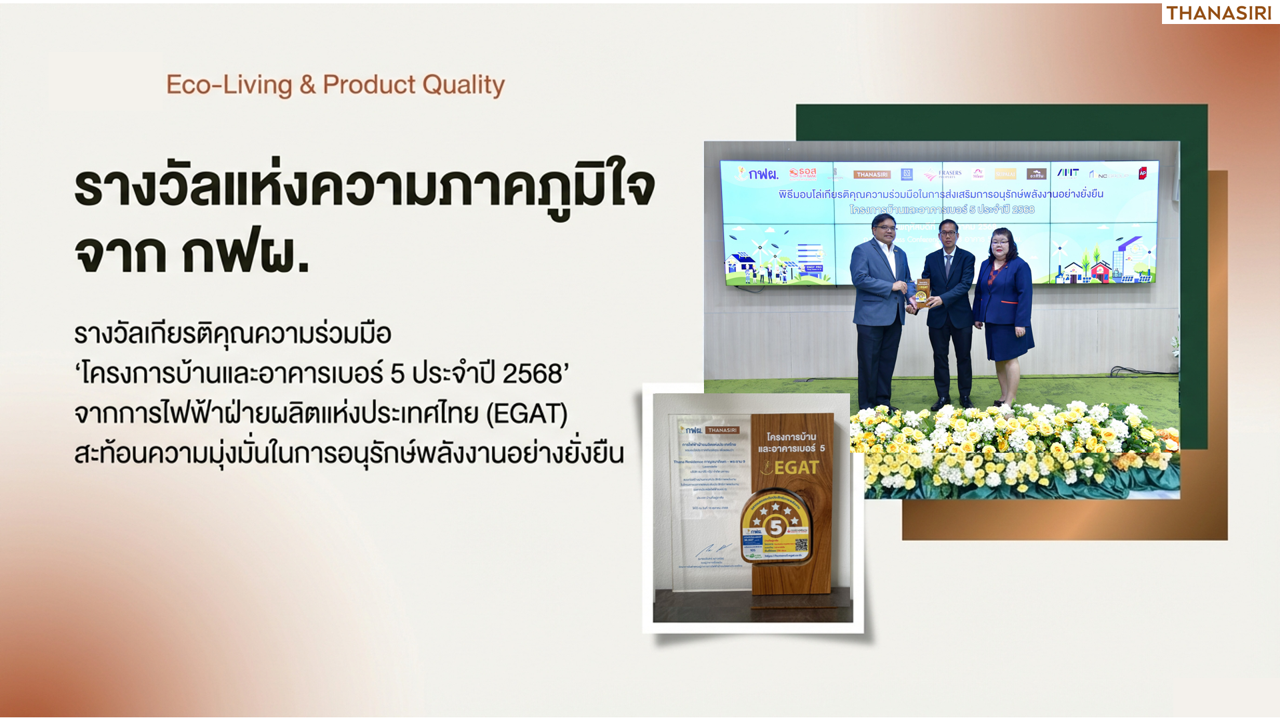
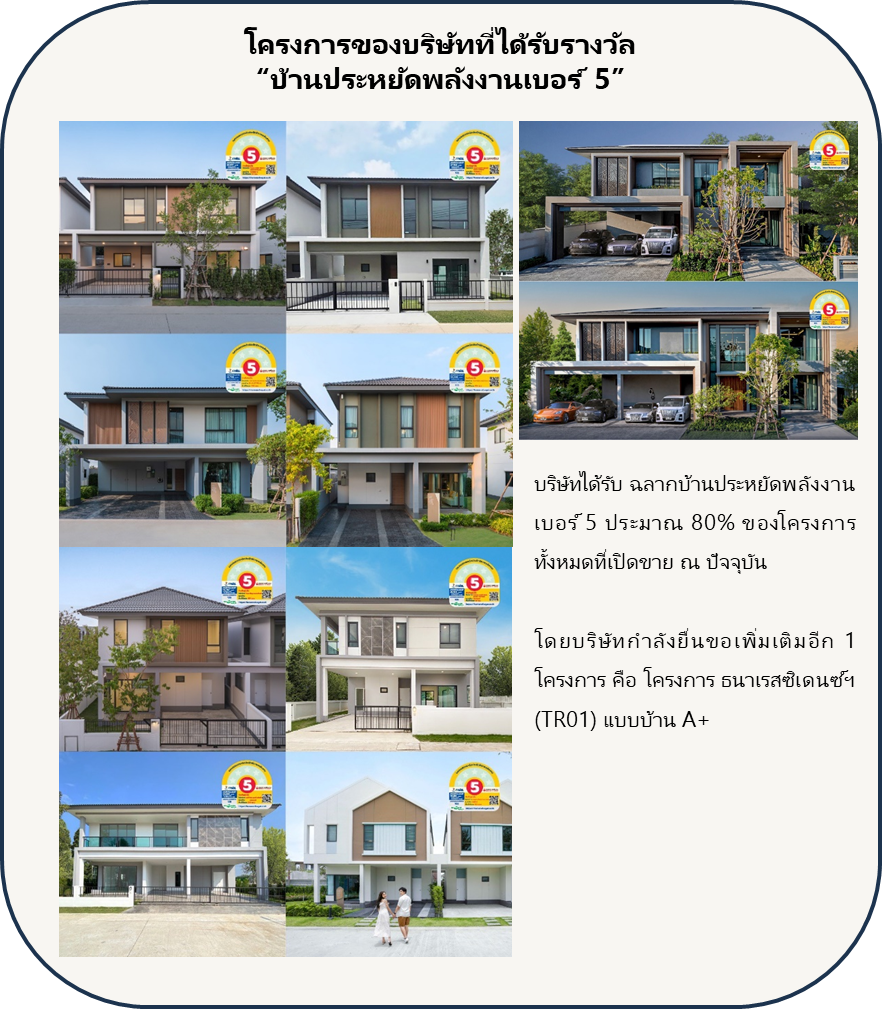
Throughout 2025, the company submitted its single-detached and semi-detached house development models within its projects for evaluation under the Energy-Saving House No. 5 program, assessed by the Electricity Generating Authority of Thailand (EGAT). Over 80% of the company's total housing projects received energy-saving house labels.
Fuel Energy Management
Fuel consumption for company vehicles totaled 14,486 liters, a 3% decrease compared to 2024, which aligns with the target to reduce fuel consumption for company vehicles. This is due to the company's transition from gasoline-powered vehicles to hybrid vehicles (electric + gasoline), as well as regular engine maintenance.
Water Management — Overview
Introduction
Water is a critical factor in business operations. Therefore, both its quantity and quality must be concretely managed in both the short and long term. All stakeholders must collaborate to improve water management processes to ensure their suitability. Through the internal environmental management policy, water usage allocation is defined, with the objective of engaging all employees in efficient water utilization. This is achieved through organization-wide communication on water resource conservation, the preparation of emergency plans to address issues arising from various disasters, the maintenance of water quality for both utility and consumption, and the control of wastewater or waste discharge in accordance with legal requirements.
Water — Plan & Guidelines
Has a Water Management Plan
Yes
Plan Description
The company establishes guidelines and a water management plan, focusing on reducing water consumption and utilizing water as efficiently and cost-effectively as possible.
Water — Withdrawal, Discharge & Consumption
Water Withdrawal, Discharge & Consumption
| Metric | Current Year | Previous Year | Two Years Ago |
|---|---|---|---|
| Total water withdrawal (Cubic meters) | 774 | 1,564 | 1,484 |
| Total water withdrawal by third-party water (Cubic meters) | 774 | 1,564 | 1,484 |
| Total water withdrawal by surface water (Cubic meters) | |||
| Total water withdrawal by groundwater (Cubic meters) | |||
| Total water withdrawal by seawater (Cubic meters) | |||
| Total water withdrawal by produced water (Cubic meters) | |||
| Percentage of wastewater treated before discharge (%) | |||
| Total water discharge (Cubic meters) | |||
| Total water discharge to third-party water (Cubic meters) | |||
| Total water discharge to surface water (Cubic meters) | |||
| Total water discharge to groundwater (Cubic meters) | |||
| Total water discharge to seawater (Cubic meters) | |||
| Total water consumption (Cubic meters) | 774 | 1,564 | 1,484 |
| Recycled water (Cubic meters) |
Water — Targets
Has Set Targets
Yes
Targets
| Target | Base Year | Base Year Value | Target Year | Target Change (%) | Unit |
|---|---|---|---|---|---|
| Reduction of water withdrawal | 2,025 | 774 | 2,026 | 10 | Cubic meters |
Water — Performance & Outcomes
Has Performance Results
Yes
Performance Description
In 2025, water consumption at the head office totaled 774 units, which is a reduction exceeding the set target to decrease water utility expenses at the head office by 47% compared to 2024. This reduction is attributed to the company's water conservation campaign and the maintenance and improvement of the head office's water piping system in 2025.
The company has water consumption control measures in its head office and projects, as follows:
Head Office
-
Publicize the importance of turning off taps when not in use and assist in monitoring after working hours in office buildings.
-
Maintenance of the water supply system to ensure optimal operational efficiency and reduce water loss due to equipment damage.
Projects
-
Ensure sufficient water reserves by obtaining permission from the water authority to install temporary water meters, thereby preventing water usage from local communities or adjacent areas.
-
Once the project's main drainage system is constructed, wastewater generated from construction activities will be discharged into the project's main drainage system. There will be intermittent retention ponds with waste traps before discharge into the public drainage system, which will not further impact public water quality.
-
Implementation of a recycled water system for watering plants in the communal areas of the project.
-
Campaign and supervise workers to use water sparingly, not leaving taps running or allowing leaks that do not serve a beneficial purpose.
-
Inspect water piping systems, water pumps, and water storage tanks to ensure they are in good condition and not damaged. If any issues are reported, repairs must be carried out promptly.
-
Provide hygienic and sufficient restrooms for workers in the construction area, along with wastewater treatment from these restrooms before discharge into the public drainage system.
-
Water is recycled for washing vehicle wheels before exiting the project and for washing roads.
Additionally, the company remains committed to water management within its projects by implementing an internal recycled water treatment system, as follows:
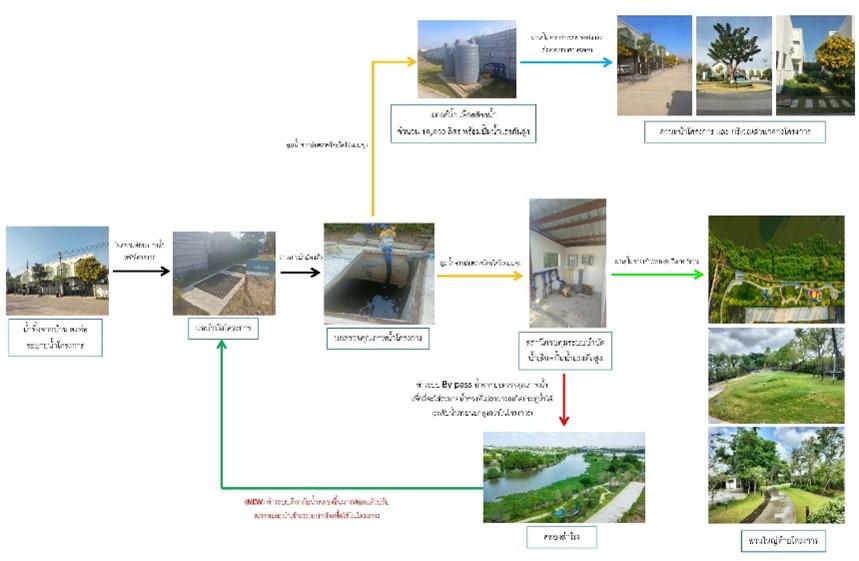
The aforementioned recycled water management system is a prototype project that mandates all company construction projects to implement a process for properly treated wastewater to be reused within the project. Examples include using water from treatment ponds to water communal plants, wash public roads, clean vehicle wheels before exiting the project, and spray water to prevent dust dispersion within the project area. This enhances water usage efficiency and reduces water discharge from the project into public drainage systems. Furthermore, sediment generated in the water retention ponds will be used for land leveling within the project.
Waste Management — Overview
Introduction
The company prioritizes waste management, particularly waste generated from project operations. The company adheres to guidelines for managing waste generated from construction processes to mitigate environmental impact, reduce waste disposal costs, and promote Waste Management within construction processes. This is coupled with fostering awareness and understanding among employees within the organization and relevant stakeholders. Measures include establishing proper waste separation points by type, organizing activities for learning waste separation, and ensuring recyclable waste is forwarded for appropriate management.
Waste — Plan & Guidelines
Has a Waste Management Plan
Yes
Plan Description
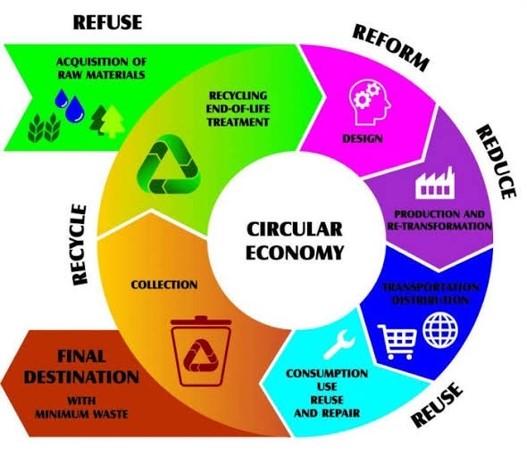
The company has adopted the principles of the Circular Economy in conjunction with the 5Rs, which are:
-
Refuse: Reject the use of environmentally unfriendly products
-
Reform: Reforming the management of construction materials
-
Reduce: Reduce consumption
-
Reuse: Reusing
-
Recycle: Recycling
Waste — Generation, Disposal & Recycling
Waste Generation, Disposal & Recycling
| Metric | Current Year | Previous Year | Two Years Ago |
|---|---|---|---|
| Total waste generated (Kilograms) | 47 | 49 | 53 |
| Non-hazardous waste (Kilograms) | 47 | 49 | 53 |
| Non-hazardous waste - Landfilling (Kilograms) | |||
| Non-hazardous waste - Incineration (with energy recovery) (Kilograms) | |||
| Non-hazardous waste - Incineration (without energy recovery) (Kilograms) | |||
| Non-hazardous waste - Other disposal operations (Kilograms) | |||
| Hazardous waste (Kilograms) | 0 | 0 | 0 |
| Hazardous waste - Landfilling (Kilograms) | |||
| Hazardous waste - Incineration (with energy recovery) (Kilograms) | |||
| Hazardous waste - Incineration (without energy recovery) (Kilograms) | |||
| Hazardous waste - Other disposal operations (Kilograms) | |||
| Total reused/recycled waste (Kilograms) | 34 | 38 | 30 |
| Reused/Recycled non-hazardous waste (Kilograms) | 34 | 38 | 30 |
| Reused non-hazardous waste (Kilograms) | |||
| Recycled non-hazardous waste (Kilograms) | |||
| Reused/Recycled hazardous waste (Kilograms) | 0 | 0 | 0 |
| Reused hazardous waste (Kilograms) | |||
| Recycled hazardous waste (Kilograms) |
Waste — Targets
Has Set Targets
Yes
Targets
| Waste Type | Disposal Approach | Target | Base Year | Base Year Value | Target Year | Target Change (%) | Unit |
|---|---|---|---|---|---|---|---|
| Non-hazardous waste | 2759 · Description: Recycle · 2760 · Description: Landfilling | Increase waste utilization | 2,024 | 49 | 2,026 | 5 | Kilograms |
Waste — Performance & Outcomes
Has Performance Results
Yes
Performance Description
Head Office
The company systematically manages waste and refuse in its business operations according to the 3 Rs principles (Reduce, Reuse, Recycle). It employs an efficient waste sorting system by type, coupled with fostering awareness and participation among stakeholders to reduce waste disposal. Furthermore, the company and its stakeholders collectively maintain a clean and safe environment in the community and society for cohabitation, as well as supporting local community hygiene by encouraging employees to purchase sufficient food and dispose of food scraps in a food waste composting machine, with the resulting compost used for plants at the head office.
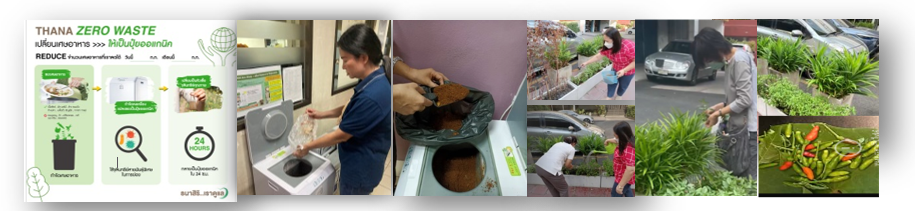
The company aims to reduce waste volume within the head office building by approximately 5-10% annually compared to the previous year. Throughout 2025, employees at the head office managed food waste by processing it into compost for plant maintenance. In 2025, the total amount of food waste disposed of was “47 kilograms” Food waste volume decreased by approximately 4% from 2024. which can be converted into “34 kilograms of compost.” The proportion of food waste converted into compost increased by approximately 12% from 2024, attributed to the team's enhanced understanding of food waste management methods.
Project
The company and its business partners prioritize environmental concerns, contributing to the development of project construction processes to mitigate environmental impacts, reduce waste disposal costs, and minimize risks associated with resource scarcity. This promotes waste management processes in construction in line with the Zero Waste concept, adhering to the principles of the Circular Economy. Construction waste materials are managed for recycling to ensure continuous utility, such as using leftover concrete from structural pouring to create walkways for future use in the project's common areas. This is an effective method for waste disposal and value creation.
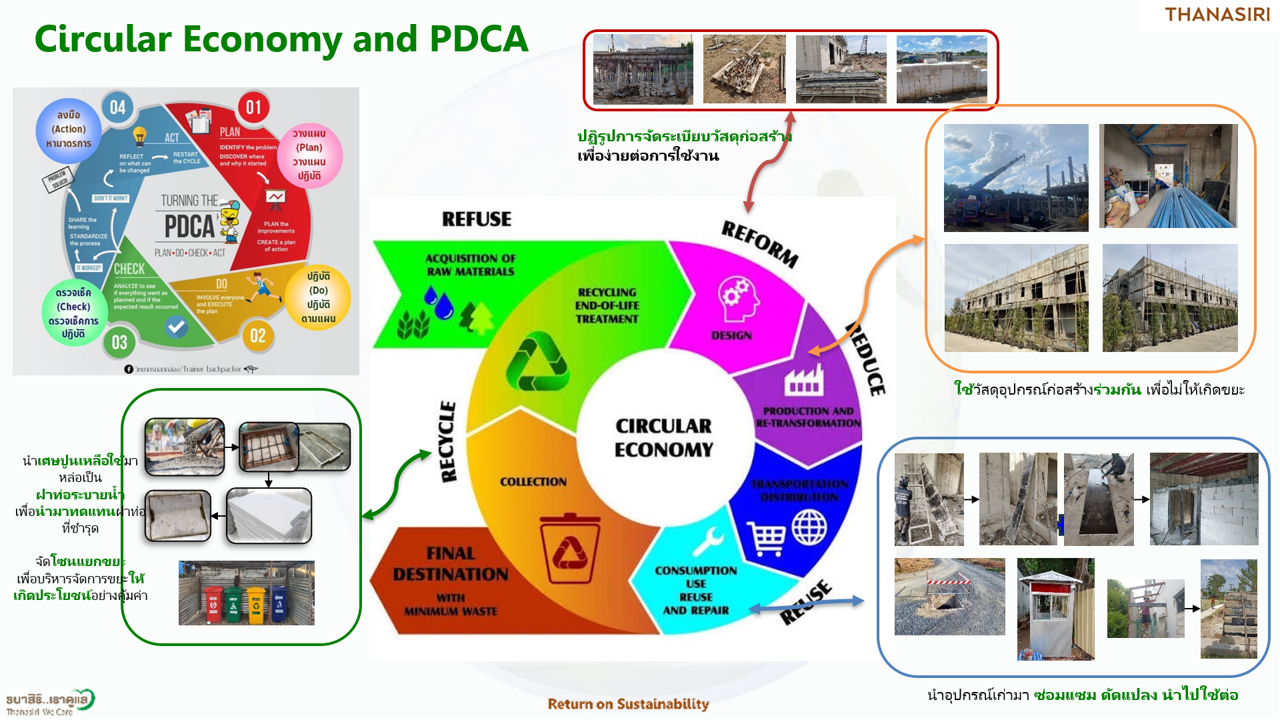
In addition to reducing waste volume, this also helps mitigate global warming and reduce current air pollution. The company will continuously implement this waste and residual material management in all Thanasiri projects, with a mission to achieve sustainable environmental management in society, by establishing the following guidelines:
-
Construction waste materials must be stored only within designated areas of the project's construction site. They should be neatly arranged, not obstructing pathways, and covered securely with tarpaulins or other suitable materials on top and all three sides.
-
Waste materials are sorted for other beneficial uses.
-
The removal of construction debris and waste from the construction site will be carried out at least once a week. If not ready for removal, appropriate and sufficient covered bins or containers must be provided, and the bin placement area must be continuously cleaned.
-
Provide covered waste bins/containers, separated for wet waste and dry/hazardous waste, placed at various points for convenient use.
-
Prior to waste removal, bags must be securely tied and checked to prevent spillage or leakage.
-
Ensure workers do not dispose of waste into drains or waterways.
-
Ensure personnel are assigned to inspect and maintain the cleanliness of waste storage areas every time waste is removed.
-
Provide safety equipment and require waste removal personnel to wear the protective gear supplied by the project.
-
Establish regulations, agreements, and campaigns, as well as incentives, for residents to sort their waste and tie bags securely before disposing of them in the designated bins according to type.
-
Monitor the municipal waste collection service to ensure regular collection.
Greenhouse Gas — Overview
Introduction
The company recognizes the importance of climate change, which is an environmental issue currently facing the world. Human activities are one factor contributing to the continuous increase in climate change and global temperatures. The company has identified an opportunity to participate in addressing this issue and is therefore committed to being part of the effort to reduce air pollution that causes greenhouse gases, which are significant causes of global warming and climate change. The company has established business operational guidelines for climate change alongside its social responsibility.
Currently, the company has implemented various projects that can reduce greenhouse gas emissions in accordance with guidelines from the Stock Exchange of Thailand and the Thailand Greenhouse Gas Management Organization (Public Organization) or TGO. This enables the company to encourage personnel within the organization to develop environmental awareness and foster cooperation in developing operations that concretely reduce measurable greenhouse gas emissions. This is to set targets for reducing the company's energy consumption and greenhouse gas emissions, as well as to manage future project implementation plans to reduce energy consumption and greenhouse gas emissions at the organizational level and at the project level under the company's responsibility. This begins with reducing greenhouse gas emissions from various organizational activities, such as meetings, training sessions, and events, by applying the principle of focusing on consumer-dimension changes to help mitigate global warming, which aligns with Sustainable Development Goal (SDG) 13, Climate Action.
GHG — Plan & Guidelines
Has a GHG Management Plan
Yes
Plan Description
As Thailand has revised its Net-Zero target from the original year 2065 to 2050, therefore, to align with Thailand's national target, the Board of Directors has approved the proposal from the Corporate Governance and Sustainable Development Committee to adjust the company's Net-Zero target to enhance operational efficiency in accordance with the company's environmental policy. The organization's greenhouse gas emission reduction plan, which aligns with Thailand's national greenhouse gas emission reduction target, is divided into three phases as follows:
Short-term goal: By 2030, reduce Scope 1 and 2 greenhouse gas emissions by 30% from the base year (2024).
Medium-term goal: By 2035, reduce Scope 1 and 2 greenhouse gas emissions by 50% from the base year (2024).
Long-term goal: By 2050, the company achieves net-zero greenhouse gas emissions.
GHG — Emissions
GHG Emissions
| Metric | Current Year | Previous Year | Two Years Ago | Remark |
|---|---|---|---|---|
| Total GHG emissions (Metric tonnes of carbon dioxide equivalent) | 446.96 | 651.9 | 30 | |
| Total greenhouse gas emissions 1 (Metric tonnes of carbon dioxide equivalent) | 33.35 | 34.52 | 0 | Scope 1 greenhouse gas emissions data for 2022-2023 has not been collected. |
| Total greenhouse gas emissions 2 (Metric tonnes of carbon dioxide equivalent) | 412.4 | 478.99 | 30 | In 2023, data collection was limited to the company's head office. From 2024 to 2025, data collection will encompass the company and its subsidiaries. |
| Total greenhouse gas emissions 3 (Metric tonnes of carbon dioxide equivalent) | 1.21 | 138.39 | In 2024, the company collected data on Scope 3 greenhouse gas emissions resulting from the company's paper consumption and employee travel. In 2025, the company will collect data on Scope 3 greenhouse gas emissions resulting from the company's paper consumption. |
GHG — Emissions Verification
Emissions Verified by a Third Party
No
GHG — Principles & Standards
Principles & Standards Applied
| Standard |
|---|
| 2671 |
GHG — Targets
Has Set GHG Targets
Yes
GHG Targets — Net Zero
Net Zero Targets
| Emission Scope | Base Year | Base Year Emissions | Near-term Target Year | Near-term Target Change (%) | Long-term Target Year | Long-term Target Value | Long-term Target Change (%) | Target Year | Target Change (%) | Unit |
|---|---|---|---|---|---|---|---|---|---|---|
| 2715 | 2,024 | 514 | 2,030 | 30 | 2,050 | 514 | 100 | 2,030 | 30 | Metric tonnes of carbon dioxide equivalent |
GHG Targets — Carbon Neutrality
Carbon Neutrality Targets
| Emission Scope | Carbon Neutrality Certified | Base Year | Base Year Emissions | Target Year | Target Change (%) | Unit |
|---|---|---|---|---|---|---|
| 2715 | N | 2,024 | 514 | 2,040 | 100 | Metric tonnes of carbon dioxide equivalent |
GHG — Performance & Outcomes
Has Performance Results
Yes
Performance Description
Company projects for greenhouse gas emission reduction.
-
Install EV Charger support points. In the ready-to-sell homes within the company's new projects, to facilitate homeowners and also help reduce the use of fossil fuels by switching to clean energy, which is environmentally friendly.
-
Selection of environmentally friendly and energy-saving materials. The company prioritizes product quality, safety, and environmental protection by supporting the selection of environmentally friendly materials. This is one of the approaches the company uses to improve the organization's energy efficiency, as well as emphasizing the selection of partners and contractors who prioritize the use of environmentally friendly materials. In 2024, the company procured environmentally friendly products from certified agencies or those with labels certifying them as environmentally friendly and energy-saving goods and services for use in projects.
-
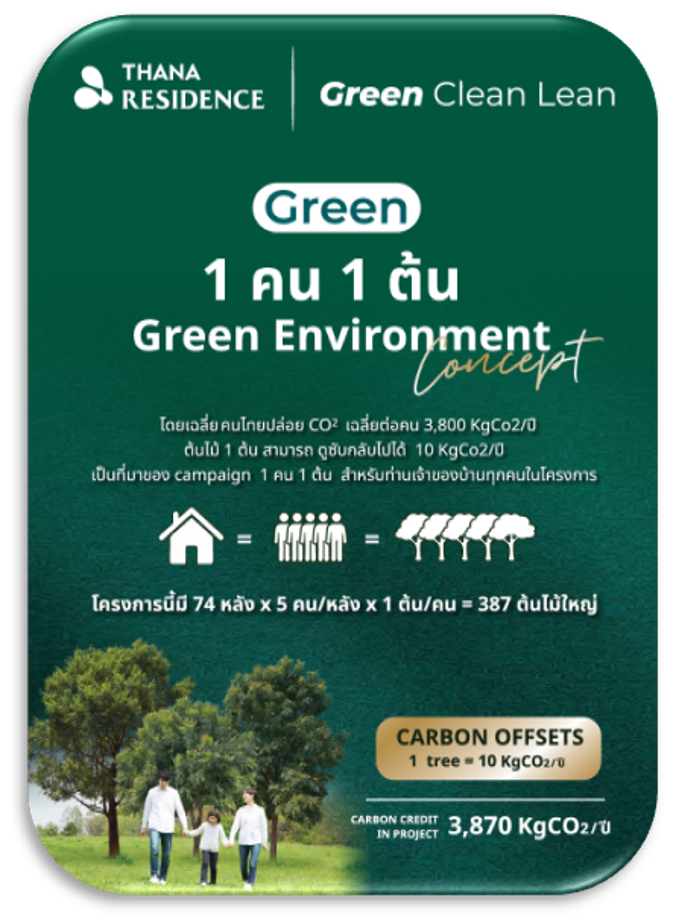
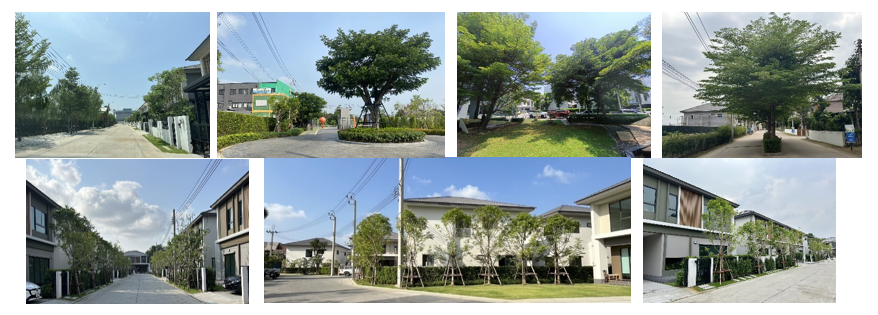
Increasing green space within the project. The "1 House 1 Tree" concept is about planting large trees to increase green space in all projects where the company undertakes development. The company will plant one large tree in the ready-to-sell home area and one large tree in the common area. Therefore, if a project has 100 houses, that project will have no less than 200 large trees providing shade, to compensate for the environmental impact of the company's project development in those areas.
The company has established a green space expansion concept, which is: “1 Person 1 Tree” The tree planting is calculated from the family members of the homeowners. In the company's new projects, perennial trees have been added based on the "1 Person 1 Tree" concept, amounting to 5 trees per house, totaling over 370 perennial trees within the project. This is to increase green space and absorb carbon dioxide.
-
Other activities promoting greenhouse gas reduction.
-
Develop and implement an energy and environmental conservation plan.
-
Promote energy-saving measures by switching off unused electrical equipment, such as turning off computer screens after each use, switching off air conditioners 15 minutes before break time, and unplugging electrical appliances.
-
Promote the use of clean energy in operational processes.
-
Improve work systems to be more online-based to reduce paper consumption in the office.
-
In addition to the rigorous greenhouse gas reduction projects implemented by the company, the company also emphasizes organizational greenhouse gas management by collecting organizational greenhouse gas emission data in accordance with the principles of the TGO (Thailand Greenhouse Gas Management Organization). Details are as follows:
-
Direct greenhouse gas, Scope 1, is greenhouse gas from mobile combustion. It is calculated from the consumption of gasoline and diesel, derived from the amount of fuel combustion in 5 company-owned vehicles, as well as refrigerants in fire extinguishers and methane emissions from the use of restrooms in the company's offices and projects.
-
Indirect greenhouse gas, Scope 2, is greenhouse gas resulting from the purchase of electricity for use within the organization. It is calculated from the amount of electricity consumed, covering 19 head offices and sales offices that will be operational in 2025.
-
Indirect greenhouse gas, Scope 3, is greenhouse gas resulting from the use of paper in the company's offices and projects throughout 2025.
Environmental Legal Incidents
Legal Violation Incidents
| Metric | Current Year | Previous Year | Two Years Ago |
|---|---|---|---|
| Number of cases or incidents of legal violations or negative environmental impact (cases) | 0 | 0 | 0 |
Other Environmental Management
Introduction
In addition to energy management (electricity and fuel) / water management / waste management and greenhouse gas management, the company also has other environmental guidelines and operational plans as follows:
-
Maintaining biodiversity and ecosystems
-
Air pollution management
Plan Description
Preservation of biodiversity and ecosystems.
The development of residential projects requires significant construction resources, including building materials, water resources, land utilization, transportation, and impacts on the environment and communities around the construction site. Therefore, the company prioritizes environmental management to balance business development and reduce environmental impacts through its policy on community, social, and environmental responsibility, from the land acquisition process for project development to project construction, both during and after construction, to ensure the company's operational guidelines.
Restoration of the natural environment within the project and biodiversity. Construction requires site preparation for construction and foundations, as well as landscape design, to minimize tree felling in the project development area. This considers environmental impacts and plans for the optimal use of existing land and natural resources, ensuring the preservation of biodiversity for the benefit of local residents, plants, animals, and maintaining the balance of soil, water, and air in the surrounding area.
Preservation of large trees within the project. The company recognizes the value and importance of existing trees on the original land prior to development. For environmental management and the creation of green landscape areas in line with business growth plans, the company ensures the preservation and maintenance of large trees. This not only improves the quality of life but also helps reduce heat and mitigate the effects of air pollution. Furthermore, creating green spaces within the project also helps reduce greenhouse gas emissions.
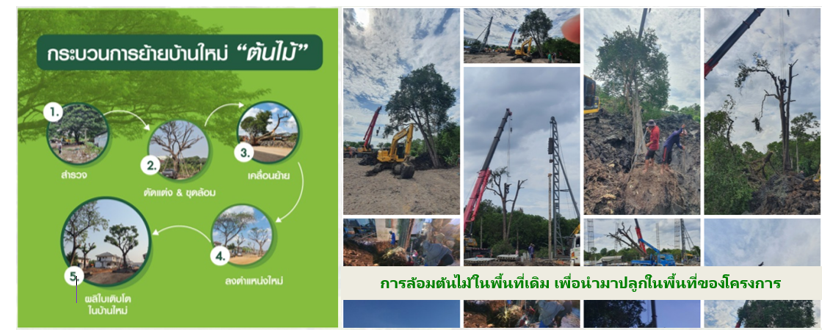
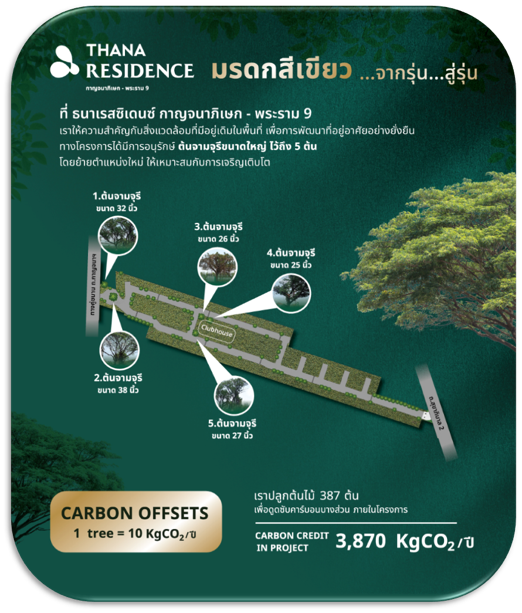
Control of fill soil quality within the project. The company prioritizes site preparation for construction, ensuring that the soil used for filling and compaction has been tested and quality-checked. This soil has a neutral pH, suitable for planting trees, contains no construction debris like bricks or stones, and is not sourced from landfills, to prevent chemical runoff from rainwater into rivers and public drainage canals.
Air pollution management. The company controls air pollution from construction dust in accordance with legal requirements, including the use of standardized measurement tools, record-keeping, and regular reporting to relevant parties. Additionally, dust levels are measured within the project and in adjacent areas. Throughout the year, the company has implemented practices to reduce the impact of dust and air pollution generated by its construction processes, as follows:
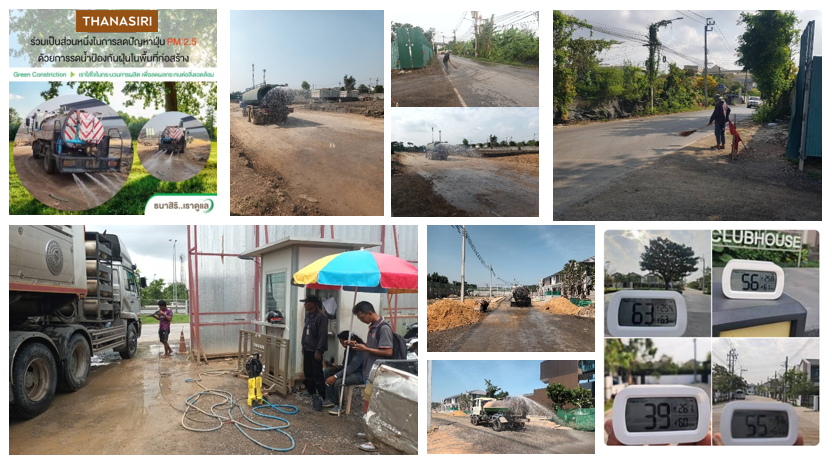
Measures for managing dust pollution impacts.
Measures during periods when the concentration of particulate matter smaller than 2.5 microns (PM2.5) in the air exceeds the standard are as follows:
The project will cooperate with government agencies in implementing air quality prevention and mitigation measures during periods when the concentration of particulate matter smaller than 2.5 microns (PM2.5) in the air exceeds the standard, such as in cases where cooperation is requested to halt construction activities.
During periods when the concentration of particulate matter smaller than 2.5 microns (PM2.5) in the air exceeds the standard, the project will water the areas around the construction site to reduce dust.
Position machinery and dust-generating activities as far as possible from dust receptors.
Do not store materials that may generate dust in the construction area.
Plan the routes and timing for material transportation to reduce dust and traffic problems, using vehicles for transportation in terms of both type and time according to the requirements of local traffic officers.
Water the construction area and entrance/exit points at least twice a day, in the morning and evening, or increase frequency as appropriate, and provide an area for cleaning vehicle wheels before leaving the construction site.
Wash truck wheels every time a vehicle exits the construction site.
Transport construction materials between 10:00 AM – 3:00 PM (outside peak hours) using 10-wheel and 6-wheel trucks, in accordance with traffic officer announcements.
Utilize a closed transportation system for dust-generating materials, such as ensuring all construction material transport trucks entering and exiting the project are covered with tarpaulins to prevent dust dispersion.
Air quality is measured daily, and results are reported to management and homeowners via the company's LINE official account.
Measures for managing air pollution impacts.
Prohibit workers from burning waste and construction materials within the construction site.
Do not leave engines running when not in operation.
Regularly inspect machinery used for operations.
Regularly inspect the condition of vehicles and engines used for transportation, worker transport vehicles, and various machinery to ensure they are always in good condition to reduce pollution.
Limit vehicle speed within the project and request cooperation in turning off engines when vehicles are parked for extended periods within the project.
The company's environmental management, as described above, ensures that there will be no violations of environmental and safety regulations or laws in 2025.
Furthermore, in 2025, the company operated its business under the THANA Green strategy and processes, focusing on managing work processes to reduce greenhouse gas emissions from upstream to downstream. As a result, the company was able to reduce greenhouse gas emissions by approximately 158,000 KgCO2eq, equivalent to planting approximately 15,800 perennial trees (1 tree absorbs approximately 9-15 kilograms of carbon dioxide per year, based on calculation principles from the Department of Climate Change and Environment).
Employees — Plan & Guidelines
Has an Employee Management Plan
Yes
Plan Description
Fair employee compensation.
The company's Executive Board is responsible for determining the employee compensation structure to ensure employees perform efficiently and effectively, in line with the annual business plan. It is a policy that overall compensation must align with the company's performance both in the short term, derived from the company's annual profits, which reflects the company's profitability and the cooperation of all employees, and in the long term, where overall employee compensation will be assessed based on performance. The company develops management guidelines based on the Balanced Scorecard principles, setting Corporate KPIs and a Strategy Map as mechanisms for measuring performance. KPIs are defined for each department, including strategic-level indicators (Strategy KPIs) and operational-level indicators (Operation KPIs). To monitor whether performance aligns with the business plan, quarterly performance review meetings are held for each department to allow for timely review of plans in response to business situations.
In addition, each employee is required to set Individual Key Performance Indicators (KPIs) with the objective of measuring individual employee performance according to their scope of duties and responsibilities. Supervisors and employees will jointly evaluate performance, which will then be used for compensation and promotion considerations. Performance monitoring and evaluation focus on aligning individual performance with the overall organizational goals, with evaluations conducted twice a year.
The performance evaluation data will be utilized by the company for other aspects of human resource management, such as bonus considerations, promotion considerations, adjustment of compensation rates, and employee development, especially for high-potential employees (Talent) and successors. This aims to boost employee morale and ensure the company has employees ready to advance into management positions to drive the company forward.
Employee training and development.
In challenging situations with changes across various dimensions, including environmental, social, economic, and international political uncertainties affecting the organization's business operations, the company will therefore focus on promoting organizational well-being (Thana Well-being) in 2025 to ensure strong physical and mental health, as well as a work environment conducive to fostering good relationships. The organizational culture, Thana Way: TRIBE, serves as a concept and guideline for collaborative work, forming a crucial foundation for becoming a Learning Organization. This means employees possess positive attitudes, a love for learning, and readiness for change to collectively drive the organization towards its goals and sustainable growth.
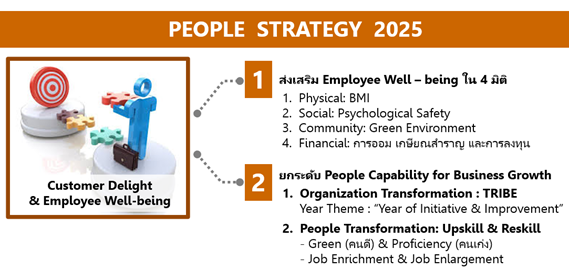
Promoting employee relations and engagement.
The company applies the principles and guidelines of Diversity, Equity, and Inclusion (DEI) by promoting equality, fairness, and respect for individual rights. This involves developing employee welfare, enhancing knowledge, skills, and attitudes, supporting employee participation at all levels, and creating a conducive work environment through the "Good People, Talented People" organizational culture. Furthermore, the company encourages employees to volunteer for 2 days per person per year to learn life skills and contribute to the community through the "Thana Volunteer" project, which aims to teach life skills, sharing, and acting for others, and "Thana Sharing," which promotes employees to be good citizens with public consciousness, learn life skills, and share items and resources with government agencies and various foundations.
Migrant/foreign labor and child labor.
The company adheres to all applicable human rights laws in Thailand and internationally, covering representatives, business intermediaries, and stakeholders in the business value chain, including contractors, developers, partners, and business associates. The company has a strict policy against involvement in any acts that violate human rights, especially forced labor, illegal use of migrant labor, child labor, human trafficking, unfair compensation, discrimination, and violation of personal data rights.
Occupational safety and health.
The company establishes safety, occupational health, and working environment policies to manage safety for employees, contractors, business partners, and surrounding communities. The safety and working environment guidelines are as follows:
-
Regular risk assessment and safety inspections to prevent and rectify environments that do not meet specified standards.
-
Provision of personal protective equipment for employees at risk during operations.
-
Emergency training and preparedness to increase awareness of workplace risks and readiness for various emergency situations.
-
Fostering a safety culture at work to reduce accidents and enhance work efficiency.
Plan Areas
| Plan Area |
|---|
| Fair employee compensation |
| Employee training and development |
| Promoting employee relations and participation |
| Migrant/foreign labor |
| Child labor |
| Occupational health and safety in workplace |
Employees — Workforce
Introduction
Equal and fair treatment of employees and labor
The Company regards its employees as its most valuable asset and a crucial factor for its success. Therefore, the Company is committed to developing and fostering a positive organizational culture and work environment. It also promotes teamwork and cultivates unity and harmony within the group of companies. Various initiatives have been implemented for employee welfare, enabling them to grow sustainably alongside the Company.
-
Non-discriminatory employment and equal opportunities
The Company has a policy for employee recruitment and hiring based on ethical principles. There is no discrimination or exclusion due to individual diversity, including race, religion, language, skin color, gender, political opinions, or any other matter. Consideration is given to the suitability for job responsibilities. Furthermore, child labor is neither used nor enforced. The Company maintains a standardized employee recruitment and selection system, and opportunities are equally provided to all interested individuals to join the Company.
In 2025, the Company and its subsidiaries have a total of 96 employees, with a nearly equal male-to-female ratio, comprising 47 males and 49 females. Employees exhibit diversity in age, gender, education level, and job functions, and are treated fairly and equally, without discrimination based on individual differences. The Company emphasizes the principle of gender equality, ensuring that both women and men receive equal treatment. Opportunities are provided for women with capabilities equal to men to assume management roles. Currently, the Company's senior management team consists of 7 members, with 3 female executives, demonstrating diversity in various aspects.
Workforce Data
| Metric | Current Year | Previous Year | Two Years Ago |
|---|---|---|---|
| Total number of employees (Persons) | 96 | 93 | 103 |
| Number of male employees (Persons) | 47 | 44 | 46 |
| Number of female employees (Persons) | 49 | 49 | 57 |
| Total employment of disabled persons (people) | 0 | 0 | 0 |
| Total disabled employees (people) | 0 | 0 | 0 |
| Total male disabled employees (people) | 0 | 0 | 0 |
| Total female disabled employees (people) | 0 | 0 | 0 |
| Total disabled workers who are non-employee (people) | 0 | 0 | 0 |
| Contributions to the fund for promoting and improving the quality of life for disabled persons | 1 | 1 | 1 |
| Total number of male employees in operational level (Persons) | 34 | 31 | 29 |
| Total number of male employees in management level (Persons) | 9 | 8 | 11 |
| Total number of male employees in executive level (Persons) | 4 | 5 | 6 |
| Total number of female employees in operational level (Persons) | 34 | 32 | 38 |
| Total number of female employees in management level (Persons) | 12 | 13 | 15 |
| Total number of female employees in executive level (Persons) | 3 | 4 | 4 |
Employees — Remuneration & Provident Fund
Introduction
Provision of appropriate remuneration and welfare benefits to all employees at all levels.
The company treats all employees at all levels with respect, adhering to principles of compassion in employee care. It implements a fair wage and compensation management policy at a level comparable to other companies in the same business group, considering the appropriateness of duties and responsibilities and aligning with employees' capabilities equally. Furthermore, compensation is adjusted to remain competitive within the same business group to incentivize current employees to continuously improve their performance.
As of December 31, 2025, the company provides remuneration to its personnel in the form of salaries, welfare benefits, provident fund contributions, and other benefits. Additionally, the company has established appropriate and fair standard welfare benefits for all employees at all levels, to care for employees both in the short and long term, as follows:
-
Provident Fund Benefit
-
Education Scholarship Benefit for employees and their children.
-
Medical Expense Reimbursement Benefit for employees and their families, which can be reimbursed based on actual expenses, not exceeding the annual limit.
-
Leave benefits provided by the company are as follows:
-
Sick Leave: Employees are entitled to sick leave for the actual duration of illness, not exceeding 30 working days per year.
-
Personal Leave: Employees are entitled to personal leave for a maximum of 3 working days per year.
-
Annual Leave
-
Employees with 1 year of service or more, but less than 3 years, are entitled to 9 working days of annual leave.
-
Employees with 3 years of service or more, but less than 5 years, are entitled to 12 working days of annual leave.
-
Employees with 5 years of service or more are entitled to 15 working days of annual leave.
-
Employees who have passed their probation but have less than 1 year of service are entitled to 9 working days of annual leave.
-
-
Leave for Religious Ceremonies/Religious Training: Employees are entitled to leave for participation for a maximum of 7 days per year.
-
Annual Employee Health Check-up Benefit: The company places great importance on the health of its employees, with the expectation that all employees maintain strong and complete physical health to enhance and develop a good quality of life. The company mandates an annual health check-up for employees once a year.
-
Accident Insurance Benefit for all employees in the organization.
-
Emergency Loan Benefit.
Remuneration & Provident Fund
| Metric | Current Year | Previous Year | Two Years Ago |
|---|---|---|---|
| Total disabled employees (people) | 70,553 | 48,155 | 66,948 |
| Total male employee remuneration (Baht) | |||
| Total female employee remuneration (Baht) | |||
| Number of employees eligible to participate in PVD (persons) | 96 | 93 | 103 |
| Total number of employees joining employee provident fund (Persons) | 60 | 57 | 99 |
| Percentage of total number of employees joining employee provident fund to total number of employees (%) | 62.5 | 61.29 | 96.12 |
| Number of PVD members / Total eligible employees (%) | 62.5 | 61.29 | 96.12 |
| Total amount of provident fund contributed by the Company (Baht) | 1,951,000 | 1,862,000 | 2,160,000 |
| Total amount of provident fund contributed by employee (baht) |
Employees — Training & Development
Introduction
Employee Potential Development. Enhancing personnel capabilities for business growth.
Promoting Organizational Culture (Corporate Culture).
By fostering an atmosphere of collaboration and teamwork, focusing on developing change leaders through a 180-degree leadership assessment tool. This serves as initial data for managers and executives to develop leadership, by benchmarking results against organizational leaders domestically and internationally, processed by a consulting firm, as detailed below:
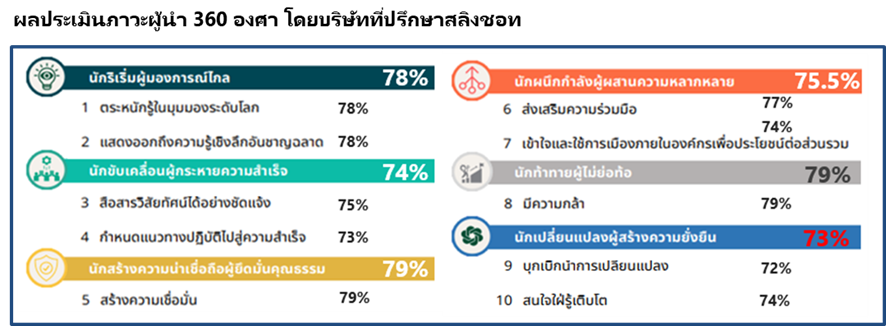
Employee assessment of organizational culture to inform organizational development, as follows:
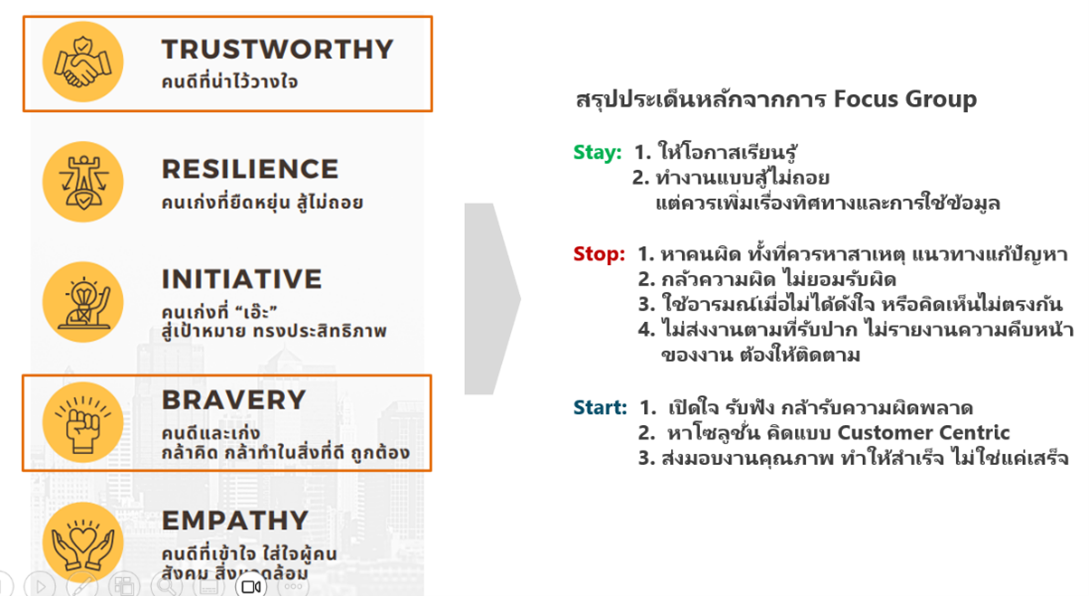
Promoting TRIBE organizational culture after conducting Focus Group. Resulting in 87% employee satisfaction.
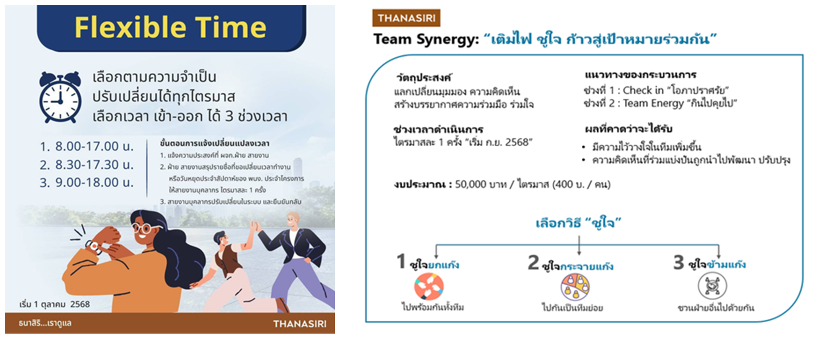
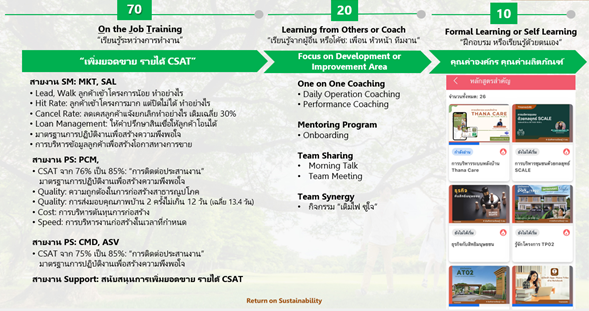
Learning & Development To enable employees to create results that contribute to their individual goals (Individual KPI), then to team goals (Team KPI), and ultimately to organizational goals (Corporate KPI), the company has a Learning Roadmap, including guidelines for integrating learning formats. 70: 20: 10 Learning Model in Practice: A development approach aimed at skill development, behavioral change, and achieving target outcomes.
-
Quarterly Learning Journey to guide employees in allocating time for self-development.
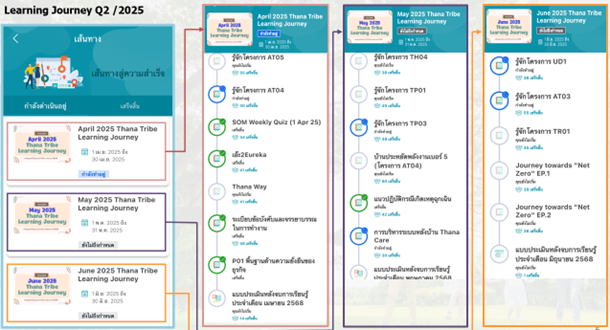
-
Learning Model 70 : 20 : 10 Guideline: Enhancing organizational potential with a personnel learning and development model.
-
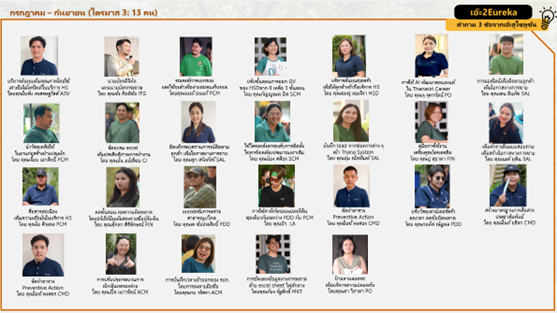
70% Learning from daily practical work. (Thana Practice) promotes a learning atmosphere by having employees share developments and improvements in work processes that align with the TRIBE organizational culture, such as: Eh2Eureka: Employees across all functions develop, improve work processes, and present operational results. Total 37 processes.
-
20% is learning from experts or mentors, providing feedback, and. 10% Learning, training, and skill enhancement in the form of Learning Online or Learning Workshop. In 2025, the People function focuses on developing supervisors, managers, and executives into Internal Trainers to impart knowledge, experience, and recommend techniques for employees to Upskill, Reskill, as well as Unlearn and Relearn. For example, managers and executives serve as speakers in various training topics.
-
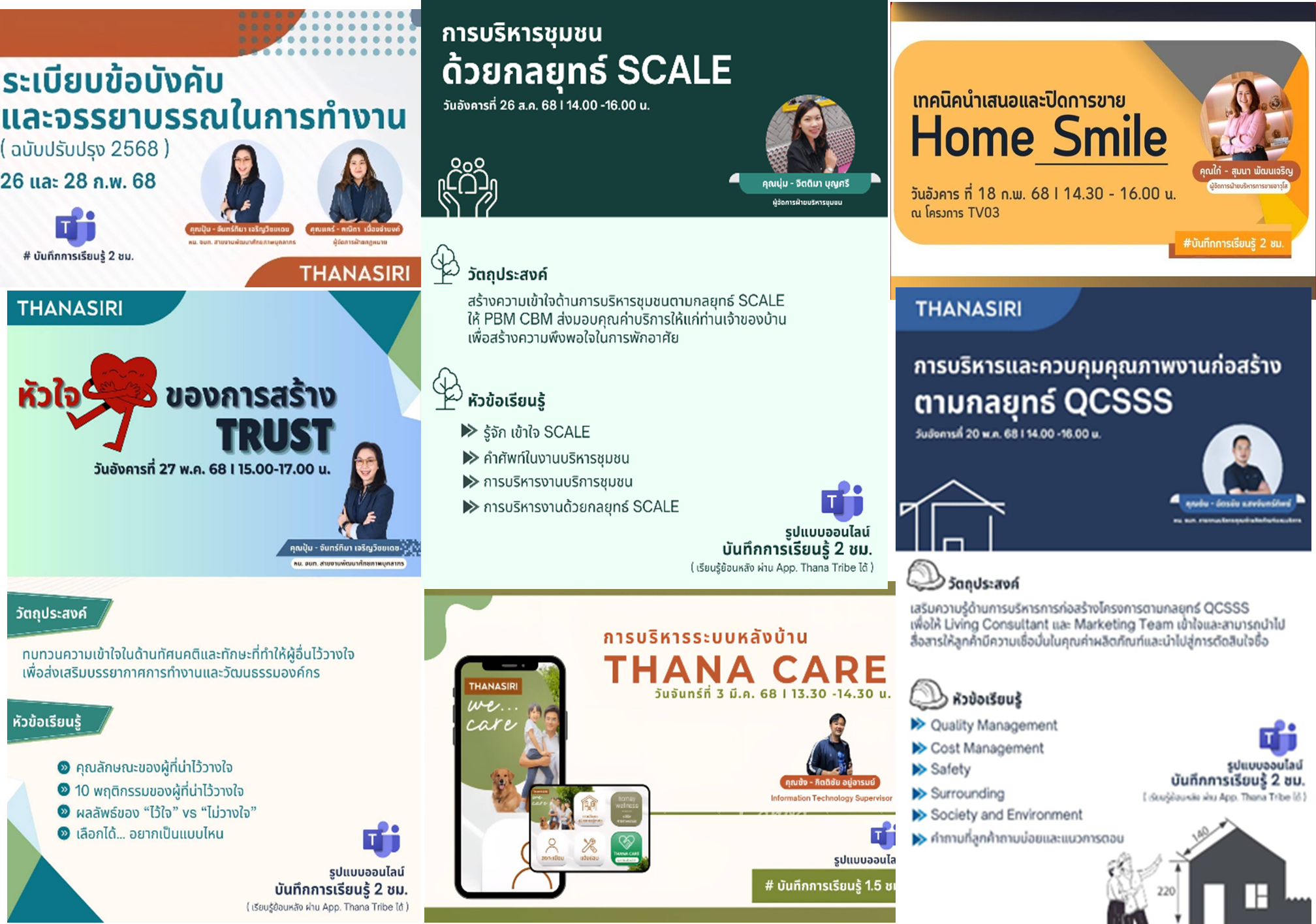
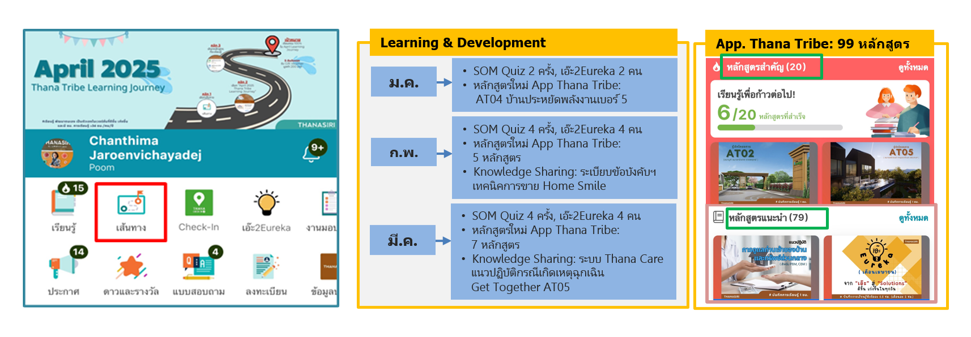
Learning Management System is a learning tool that helps employees allocate their own learning time. It compiles organizational knowledge such as Corporate Culture, Project Values & Product Knowledge, and various Soft Skills, totaling nearly 100 courses. Comparing learning between 2024 and 2025, it was found that learning behavior in 2025, with. Communication Strategy. as follows:
-
Communication of monthly courses and continuous reporting of learning outcomes.
-
Continuous communication of learning hours per department and function, compared against targets.
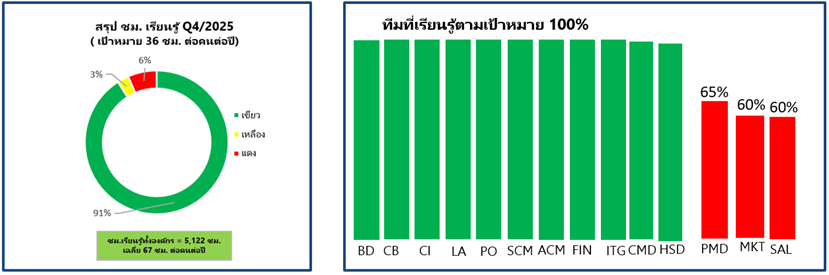
Summary of Employee Potential Development for 2025.
Focused on enhancing skills to achieve target outcomes. A learning-supportive environment is created by the CEO, the organization's leader. A Learning Management System (LMS) called App. Thana Tribe is prepared to enable employees to learn anywhere, anytime, keeping pace with rapid changes. The company manages learning and development through internal learning (Internal Learning) in the form of Learning Workshops and Learning Online, as well as sending employees for external learning, with details as follows:
Internal Learning. ( Internal Learning) totaling 114 courses, divided into:
-
Learning Workshop, 15 courses.
-
Learning Online @App Thana Tribe, 99 courses.
External Learning: Total 30 courses.
In summary, employees received training and development. Total 94 people, representing 100% of all employees.
Training Data
| Metric | Current Year | Previous Year | Two Years Ago |
|---|---|---|---|
| Average employee training hours (Hours / Person / Year) | 67 | 33 | 26.5 |
| Employee development and training expenses (baht) | 875,829 | 1,100,000 | 2,108,678 |
Employees — Occupational Health & Safety
Introduction
The company consistently and efficiently manages the organization's safety, occupational health, and working environment by establishing measures to prevent and ensure the safety of all employees within the organization. It also has preparedness measures in various aspects to facilitate employees in their work, ensuring suitability for situations and alignment with business operations, thereby helping to reduce risks and impacts that may arise for stakeholders and business operations, such as preventing work-related injuries and reducing costs resulting from work accident-related disruptions. Therefore, the company aims to establish and emphasize maintaining high standards in safety, occupational health, and a good working environment to create well-being for employees, contractors, and relevant stakeholders, ensuring their safety and well-being during work.
With a commitment to being an organization free from work-related accidents, the company has established a policy on safety, occupational health, and the working environment that affects all employees, as well as the community and society. This policy strictly adheres to relevant laws, regulations, and government announcements. The policy on safety, occupational health, and the working environment is as follows:
-
Workplace safety, employee hygiene, and maintaining the working environment are the responsibilities of all employees to ensure the safety of their own lives and property, as well as that of the company and others.
-
The company promotes a good awareness and attitude among employees regarding safety, occupational health, and the working environment.
-
All employees must prioritize the safety of themselves, their colleagues, and the company's assets at all times while performing their duties.
-
The company supports improving working conditions and the environment to be safe and orderly by requiring all employees at all levels to implement 5S activities to organize documents and items and foster discipline in maintaining the workplace.
-
The company supports and promotes workplace safety activities to achieve maximum practical results for all parties.
-
The company monitors and evaluates the implementation of its policy on safety, occupational health, and the working environment to ensure serious adherence and maximum efficiency.
-
The company is committed to continuously improving its safety, occupational health, and working environment operations.
The company has set goals for safety, occupational health, and the working environment, including the rate of work-related injuries, the rate of absenteeism due to work-related injuries, and specifically, zero work-related fatalities throughout the year. Therefore, the company has implemented the following activities related to safety, occupational health, and the working environment:
Safety Aspect
-
Installation of fire extinguishers, safety equipment, and safety signs at both the head office and all company projects.
-
Improving the design of personal protective equipment for at-risk workers to higher standards, including safety helmets, safety shoes, and jackets.
-
Increased installation of fire extinguishers and alarm systems in all worker accommodation areas across all projects.
-
Arranging fire extinguisher usage tests for contractor workers to ensure proper use in emergencies.
-
Organizing basic firefighting training and fire evacuation drills at the head office and company projects.
-
Implementing strict safety controls at every stage of construction, such as appropriate work attire, installation of construction detail signs, and signs for work regulations and practices under various hazardous conditions.
Occupational Health Aspect
The company prioritizes and cares for the physical and mental well-being of employees in various potential situations to prevent risks that may arise during work, from unexpected events, or from work-related impacts such as stress or epidemics. The company communicates and organizes various activities to enhance employee hygiene in different forms, including educational and recreational activities, as follows:
-
Providing annual health check-ups for all directors, executives, and employees.
-
Providing 4-strain influenza vaccination to all directors, executives, and employees, along with publicizing and providing information about the disease and prevention methods.
-
Providing physical therapy to alleviate office syndrome symptoms for all employees, treating neck, shoulder, and back pain resulting from daily work.
-
During periods of severe PM2.5 dust levels, the company provided N95 masks to all executives and employees to protect against PM2.5 dust.
-
Regular weekly cleaning of employee desks with disinfectant to help reduce infection in frequently touched areas.
-
Providing a clean, hygienic, and conducive working environment and workspace.
-
Establishing health and wellness clubs, such as a Running Club, Badminton Club, Table Tennis Club, Zumba Club, etc.
In addition to caring for occupational health and the working environment, the company also promotes employee engagement and retention to ensure continuous business growth by providing workplace benefits and additional benefits to employees, such as:
-
Providing monetary rewards as encouragement for employees who achieve the company's goals, as well as offering other special monetary awards on appropriate occasions.
-
Providing assistance to employees on various occasions, such as get-well baskets for hospitalized employees, and financial aid for employees in cases of natural disasters.
-
Providing scholarships for employees' children who meet the company's criteria, to alleviate the financial burden on employees.
-
Organizing quarterly company annual parties, along with Thanasiri’s Town Hall Meetings and activities for various important occasions, to add vibrancy, foster interaction within and between departments, create a positive atmosphere, and relieve work-related stress for employees.
Furthermore, the company requires all employees, including partners, suppliers, contractors, and builders working on various company projects, to strictly adhere to the policy on safety, occupational health, and the working environment. This is to comply with relevant laws and regulations, enabling employees and contractor workers to operate in a suitable environment, reduce accidents and hazards, and prevent adverse effects on the health and well-being of employees and contractor workers. The goal is to elevate workplace safety standards, as the company recognizes the necessity of fostering safety awareness as part of work success and as a desirable practice to achieve sustainable safe work.
Furthermore, in accordance with the Ministerial Regulation on Standards for the Administration and Management of Safety, Occupational Health, and Working Environment B.E. 2549 (2006) dated May 16, 2006, employers are required to appoint management-level employees with specific qualifications as stipulated in the Ministerial Regulation to serve as Safety Officers. Therefore, to ensure that the company's executives and employees gain knowledge and understanding of correct operational guidelines, the company organized training for "Management-Level Safety Officers," inviting experts from the Occupational Safety and Health Promotion Association (Thailand) as speakers. All company executives are required to complete a total of 12 hours of training.
The company has established a Safety, Occupational Health, and Working Environment Committee for the establishment to oversee the safety of employees in both the office and project areas. It also aims to instill awareness and understanding in managing and supervising safety work for employees at all levels, ensuring that all employees possess knowledge and understanding of their work and are informed about various safety, occupational health, and environmental information from both internal and external relevant agencies. To prevent work-related accidents, clear and practical guidelines are established for emergency or hazardous situations. Policies and practices are strictly communicated and understood. Regular safety meetings are held, and new employees receive training before starting work. Safety training activities are organized to raise safety awareness among contractor workers in projects, leading to cooperation in strict control, supervision, and compliance. The Safety, Occupational Health, and Working Environment Committee for the establishment has the following roles and responsibilities:
-
Considering policies and plans for workplace safety, including off-the-job safety, to prevent and reduce accidents, injuries, illnesses, or nuisances arising from work or unsafe working conditions, to be submitted to the employer.
-
Reporting and recommending measures or corrective guidelines in accordance with laws regarding workplace safety and safety standards to the employer, for the safety of employees, contractors, and external personnel who perform work or use services within the establishment.
-
Promoting and supporting workplace safety activities within the establishment.
-
Considering regulations and manuals on workplace safety for the establishment, as well as workplace safety standards for the establishment, to be submitted to the employer.
-
Surveying workplace safety practices and reviewing statistics of accidents occurring in the establishment at least once a month.
-
Considering projects or training plans related to workplace safety, including projects or training plans concerning the roles and responsibilities in safety for employees, supervisors, executives, employers, and personnel at all levels, to submit opinions to the employer.
-
Establishing a system for reporting unsafe working conditions as a duty for all employees at all levels.
-
Following up on the progress of matters submitted to the employer.
-
Reporting annual performance, including identifying problems, obstacles, and recommendations for the committee's duties upon completion of one year in office, to be submitted to the employer.
-
Evaluating the performance of workplace safety operations within the establishment.
-
Performing other workplace safety duties as assigned by the employer.
As a result of continuous and regular implementation of safety, occupational health, and working environment activities, the company's safety performance in 2025 met the established targets.
Occupational Health & Safety Data
| Metric | Current Year | Previous Year | Two Years Ago |
|---|---|---|---|
| Total number of lost time injury incidents by employees (Cases) | 0 | 0 | 0 |
Employees — Labour Relations
Labour Relations — Introduction
The company conducts an annual assessment of employee engagement with the goal of maintaining and increasing engagement levels to a higher standard. As the company believes that every employee is a crucial mechanism for organizational growth, actively listening to feedback from employees at all levels is an approach the company implements annually. to utilize the data for organizational development and improvement, by providing a platform for employees to give quick, timely, and clear feedback to the organization, enabling the organization to address issues promptly, precisely, and efficiently. This will impact the delivery of organizational value to customers, in line with the organization's passion: "Thanasiri... We co-create a serene, warm society in every rhythm of life sustainably." In 2025, the overall average employee engagement score was 79.8 percent.
The company has utilized employee feedback as a guideline for organizational development, starting from co-creating a work environment that reflects the organizational culture of "Good People, Talented People" with "TRIBE" behavioral values for working, to ensure that people within the organization share common ideas and practices. This includes promoting feedback and appreciation through the "Do Good, Get Praised" activity, where colleagues send stars to praise peers whose behavior reflects organizational values, as well as developing leadership skills for personnel within the organization through on-the-job learning in a 70:20:10 model, and planning for medium-term employee potential development programs.
Labour Relations Data
| Metric | Current Year | Previous Year | Two Years Ago |
|---|---|---|---|
| Total voluntary resignations (Persons) | 25 | 34 | 13 |
| Male employees who voluntary resigned (Persons) | 8 | 10 | 7 |
| Female employees who voluntary resigned (Persons) | 17 | 24 | 6 |
| Percentage of employee turnover leaving the Company voluntarily (%) | 26.04 | 36.56 | 12.62 |
| Evaluation result of employee engagement | 1 | 1 | 1 |
Employees — Employee Representation
Introduction
Welfare Committee in the Establishment
The company has established a Welfare Committee in the establishment, consisting of 5 executives and employees of the company, with the following scope and responsibilities:
-
Collaborate with the company to arrange welfare benefits for employees.
-
Provide consultation and offer opinions to the company regarding the provision of welfare benefits for employees.
-
Monitor, control, and oversee the welfare benefits provided by the company to employees.
-
Propose opinions and guidelines for providing beneficial welfare benefits for employees to relevant government agencies.
In 2025, the Welfare Committee in the establishment held 1 meeting to consider adjusting various welfare benefits to align with the current cost of living. The company recognizes the importance of employees as valuable resources and is therefore committed to continuously developing and improving welfare benefits to promote a good quality of life and employee engagement with the organization.
Employees Are Represented Collectively
Yes
Forms of Representation
| Form |
|---|
| Welfare committee |
Employees — Targets
Has Set Employee Targets
Yes
Targets
| Indicator | Target Areas | Target Year | Target Year — Description |
|---|---|---|---|
| Training Hours | 2984 · Description: Employee training and development | 2,025 | Over 85% of all employees received knowledge development training. |
Employees — Performance & Outcomes
Has Performance Results
Yes
Performance Description
Company's comprehensive human rights performance
-
Non-use of child labor: Employment must comply with the law, including opposing the use of child labor and not supporting the use of child labor or illegal labor in any form.
-
Non-discrimination against individuals, emphasizing human dignity and fundamental rights by treating all stakeholder groups equally.
-
Fair labor protection for both employees and contractors, starting from a fair hiring process, compensation in compliance with labor laws, appropriate for job positions and responsibilities, and comparable to businesses in the same industry. This also includes setting appropriate working hours in accordance with legal requirements, maintaining a good working environment, and ensuring occupational safety.
-
Respect for freedom of thought and expression of opinion, providing opportunities for employees and stakeholders to offer suggestions and express opinions on various matters to the company, as well as allowing employees to form groups without violating the law. A welfare committee is established in the workplace to represent employees in overseeing and providing feedback on various employee welfare matters.
Results of employee well-being promotion initiatives.
-
Promoting employee well-being (Physical & Mental)
-
Promoting preventive physical well-being for employees through annual health check-ups, influenza vaccinations, adjusting healthcare coverage to include medical treatment, dental care, physical therapy, and eye care, as well as providing preventive physical health packages for employees to prevent office syndrome.
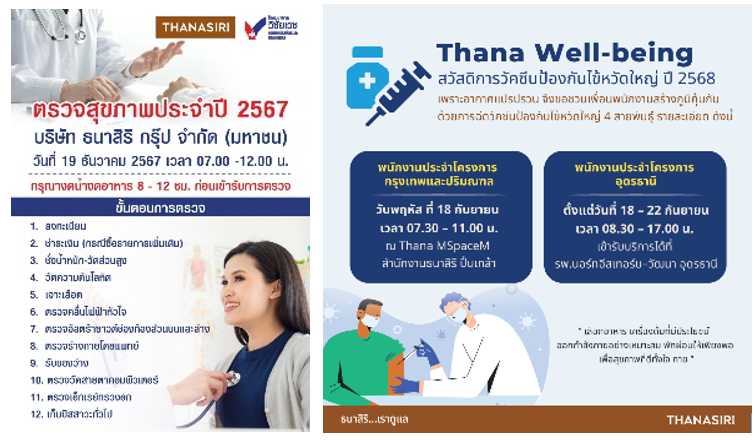

-
Managing Body Mass Index (BMI) to meet standard criteria to reduce the risk of Non-Communicable Diseases (NCDs) through the "120-Day Challenge" activity. More than 60% of all employees participated, resulting in 88% of employees improving their BMI and 17% achieving standard BMI levels.
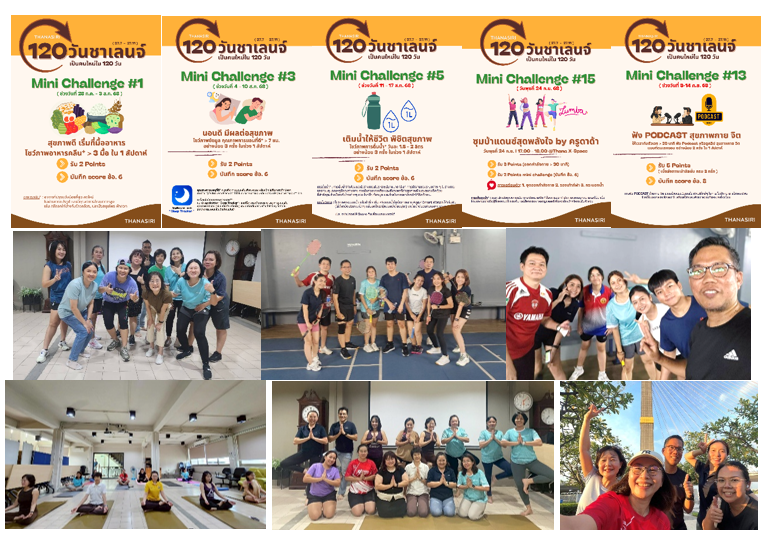
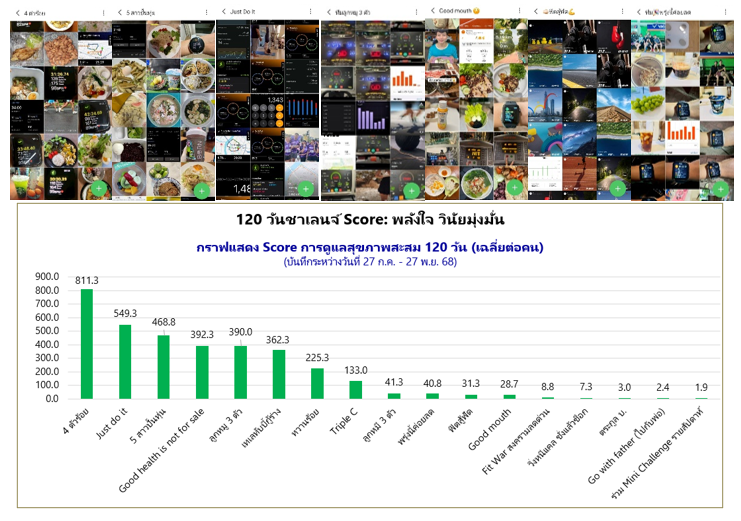
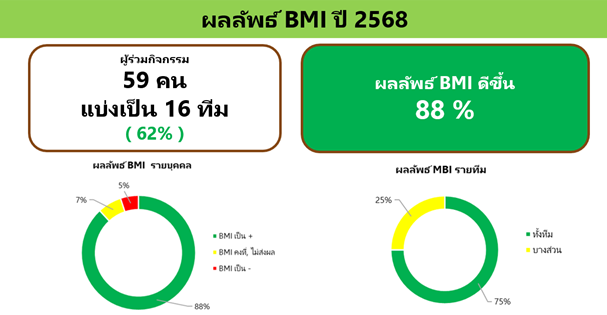
-
-
Promoting good physical and mental health among employees with a public-spirited mindset.
The company supports an organizational culture of "good and capable people" by providing employees with 2 days of volunteer leave per person per year to learn life skills and participate for the common good. Employees have shown interest in participating in the following activities:
-
Thana Volunteer: The company encourages employees to learn life skills and sharing, and to act for others. A total of 42% of all employees participated as volunteers.
-
Thana Sharing: The company encourages employees to share items and resources with government agencies and various foundations, accounting for 74% of all employees.
-
Special Activities
-
Special Meal with CEO and 8 TRIBE Champions: This activity aims to provide a platform for exchanging feelings and opinions, and to offer opportunities for creative suggestions, as well as to strengthen organizational culture, relationships, and collaboration for organizational development towards value and worth goals. This special meal involved 35 employees from the Product and Service Value Management and Sales and Marketing Management departments, accounting for 37% of all employees, with a satisfaction rate of 94%.
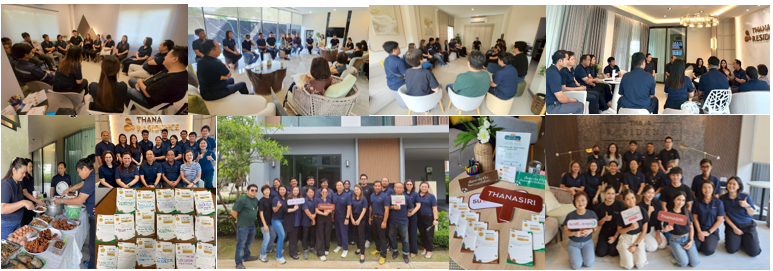
-
"Ignite the Spirit" Activity: The objective is to exchange perspectives and opinions and to foster an atmosphere of cooperation and collaboration. 100% of employees participated in this activity.
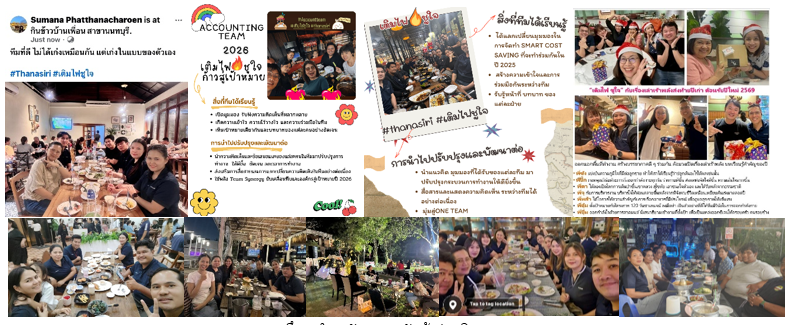
-
-
-
Creating a friendly working environment (Green Environment)
The company creates an environmentally friendly working environment, develops green offices, systematically sorts and manages office waste, and instills awareness in employees to utilize resources efficiently and conserve energy.
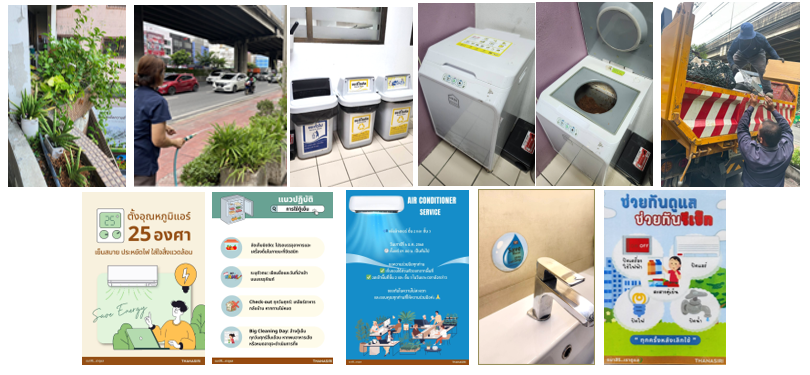
-
Enhancing knowledge on savings, comfortable retirement, and investment.
The company provides training on tax planning, investment, and debt management to reduce mental burden and build confidence in employees' financial future.
Customers — Plan & Guidelines
Has a Customer Management Plan
Yes
Plan Description
The company is committed to developing its products and services to create maximum customer satisfaction and benefit, and adheres to treating customers with responsibility and integrity under the following policy:
-
The company places great importance on product quality and standards, focusing on the use of quality materials, standardized construction, and continuous product quality improvement to ensure customers receive high-quality products and maximum satisfaction.
-
Deliver quality products and services that meet customer expectations at a fair price.
-
The company prioritizes customer safety and is committed to ensuring that customers receive quality and safe products in accordance with international safety standards and regulations.
-
Provide accurate, sufficient, and timely information to customers to prevent misunderstandings regarding the quality, quantity, or any conditions of products or services, without distorting facts.
-
Implement measures to protect customer confidentiality, ensuring that customer information or secrets are not improperly used for personal gain or by related parties, and will not disclose customer information without prior authorization from the customer or an authorized company representative, unless such information must be disclosed to relevant third parties for clarification or legal proceedings.
-
Arrange for the service team to introduce themselves to customers after the transfer of ownership, including following up and inquiring about customer satisfaction, and strengthening relationships with homeowners.
-
The company provides a customer relations system for communicating with customers, including efficiently handling complaints regarding product quality, to quickly respond to customer needs.
Plan Areas
| Plan Area |
|---|
| Responsible production and services for customers |
| Communication of product and service impacts to customers/consumers |
| Development of customer satisfaction and customer relationship |
| Protection of customer personal information |
Customers — Satisfaction Results
Introduction
The company cares for its customers and is ready to improve and develop products and services. Therefore, it surveys customer satisfaction and gathers feedback at each step throughout the process, such as inquiring about the service provided by various departments to customers, from sales and construction to various after-sales services. Additionally, customer satisfaction surveys are regularly conducted for residents already living in the projects. In 2568, the customer satisfaction survey results are as follows:
|
Plan Plan |
Objective Objective |
Indicators Key Result |
KPIs 2568 |
|
|
Target |
Results |
|||
|
Elevating service standards To build customer satisfaction |
Customer satisfaction score |
85% |
80% |
|
Building brand confidence |
Customer NPS score |
35% |
(16%) |
Measuring customer satisfaction in community management and services
Following the "S C A L E" approach, in 2568, the customer satisfaction evaluation results for community management and services are as follows:
|
Plan Plan |
Objective Objective |
Indicators Key Result |
KPIs 2568 |
|
|
Target |
Results |
|||
|
Building brand confidence |
% Safety confidence |
> 85 |
76 |
|
Maintaining common property for constant readiness and homeowner satisfaction |
Convenience in using common areas 2.1 % disruption of system operations and club facilities |
0 |
19 |
|
Cost-effective, transparent, and auditable budget utilization |
Value for money in budget utilization 3.1 Number of projects exceeding the allocated budget |
0 |
2 |
|
Harmonious and warm co-living at every stage of life |
Livability
|
> 4 < 5 100 |
3 15 100 |
|
Social and environmental responsibility |
Caring for and preserving society and the environment
|
100 100 |
100 0 |
Measuring homeowner satisfaction with after-sales service
In 2568, the customer satisfaction evaluation results for after-sales service are as follows:
|
Plan Plan |
Objective Objective |
Indicators Key Result |
KPIs 2568 |
|
|
Target |
Results |
|||
|
Establishing and maintaining quality standards for After-Sales Service (ASV) |
Building confidence in after-sales service, value for repair work, and customer satisfaction with the Thanasiri brand |
|
> 80 |
89 |
|
> 80 |
94 |
||
|
> 5 |
6 |
||
Guidelines for developing customer and homeowner satisfaction
Regarding the development of customer and homeowner satisfaction, after obtaining the satisfaction scores from customers and homeowners, the company has utilized these scores to consider each significant matter. The customer relations team has participated in meetings to discuss with relevant parties to find ways to develop and improve customer satisfaction results. Development plans have been established, both short-term for issues that can be immediately resolved and long-term development plans for matters requiring time to define processes or approaches for further development and improvement.
Customer Satisfaction Results
| Metric | Current Year | Previous Year | Two Years Ago |
|---|---|---|---|
| Evaluation results of customer satisfaction | 1 | 1 | 1 |
Customers — Targets
Has Set Customer Targets
Yes
Targets
| Indicator | Target Areas | Target Year | Target Year — Description |
|---|---|---|---|
| Customer Satisfaction Scores | 3009 · Description: Development of customer satisfaction and customer relationship | 2,025 | Customer satisfaction score of 85% |
Customers — Performance & Outcomes
Has Performance Results
Yes
Performance Description
The company has a policy of providing services to customers without discrimination based on nationality, race, gender, age, physical ability, occupation, income, political beliefs, or religion. Customers will receive equal and equitable service, and there will be no denial of access to any products or services that violate human rights principles. The company's approach to customers is guided by the concept of "Thanasiri...We Care," as follows:
Construction and Service Processes
The company meticulously focuses on creating quality residences, considering correct and cost-effective energy reduction from project planning, house orientation, selection of appropriate construction materials, increasing green spaces, as well as designing for energy conservation and environmental preservation. Functions are designed to meet all uses, emphasizing natural cooling methods for homes and incorporating mechanical cooling as a hybrid component. This provides energy-saving options for air conditioning, reduces lighting electricity consumption, and other electrical appliances, while construction costs remain comparable to general market homes, resulting in good value for money.
In addition to design based on planning, architectural, and engineering principles, all of the company's projects also consider incorporating innovation into their design and component arrangement to create value for the product, meet modern lifestyle needs, and benefit consumers. This includes considering long-term commitments in terms of material durability, emotional benefits, usage flexibility, ease of maintenance and repair, avoiding excessive financial burden on consumers, as well as social and environmental responsibility.
The company prioritizes waste disposal processes to prevent environmental pollution, for example, wastewater treatment systems for every house and wastewater discharged from the project into public water sources must meet quality standards.
Quality
The company operates under a quality management system and international standards, emphasizing every process from planning, control, inspection, and data analysis to continuously improve and develop its systems. The company is committed to continuously enhancing the quality of products and services for the benefit of consumers and to comply with legal requirements, professional standards, and documented agreements with customers, as well as considering the company's stakeholders.
The company focuses on systematic management processes at every step, ensuring traceability, and recognizes the organizational context that reflects the relationship between the business and its stakeholders. Understanding the needs and expectations of stakeholders will lead to cooperation and co-creation of value. Emphasis is placed on risk management and considering opportunities related to operational-level activities that diverge from enterprise-level risks, which is a crucial foundation for the company to continue striving for sustainable development.
To respond to customer needs, the company has established channels for customers to communicate feedback, suggestions, and complaints regarding products and services through its Call Center system and online channels such as Line, Facebook, E-mail, and the company's website. A central unit is responsible for handling various matters, including repair notifications, complaint reception, and providing information to customers or those interested in the projects. Additionally, the company's senior executives regularly visit various projects to identify issues, which leads to prompt corrective or preventive measures.
The company's operations aim for continuous improvement in product and service quality to meet customer needs and build satisfaction. This is achieved by measuring customer satisfaction in various aspects, such as after-sales service, repair services, project management, information provision, and service speed, etc. This allows relevant departments to use these metrics to evaluate customer satisfaction with the quality of homes and employee services, enabling the company to understand customer needs and expectations for continuous process improvement and development.
Accurate and clear advertising and public relations information.
The company places great importance on creating advertising and public relations media to provide accurate and verifiable product information, ensuring fairness to consumers, as follows:
Product-related messages used in advertising and public relations.
The company uses advertising messages that enable consumers to fully understand product details, including product name, product type (detached houses, semi-detached houses, and townhomes), location, price, telephone number, website, and product images in advertisements. Particularly, for legal disclaimers, the company emphasizes completeness and accuracy in accordance with the Consumer Protection Act B.E. 2522 (1979).
Illustrative images in advertising and public relations.
The company's policy emphasizes using images of detached houses, semi-detached houses, and townhomes taken from actual company projects for all forms of advertising, so that consumers can clearly see the real products. In cases where the actual product is not yet completed, the company will design illustrative images as project simulations that closely resemble the actual product, and will always include the phrase "simulated image" to ensure consumers understand correctly.
Messages regarding promotions / special conditions to support sales.
In cases where the company offers special privileges to customers in the form of promotions, the advertisement text will clearly detail discounts and complimentary gifts, and specify the start and end dates for receiving such privileges, to ensure mutual understanding between the company and its customers.
Customer Confidentiality and Personal Data Protection
The company has personal data protection measures to prevent data breaches that could lead to reputational damage, loss of customer trust, and financial losses from compensation or fines. The company is well aware of the importance of this matter and has therefore established policies and data storage systems, especially for electronic and personal data, to ensure security, transparency, and traceability, in compliance with the Personal Data Protection Act B.E. 2562 (2019). This is to protect the rights of data subjects and to maintain international standards for the collection, use, or disclosure of personal data. Particularly in the current era, where consumer behavior increasingly relies on online spending and life and work patterns are more online, there is a growing trend of large volumes of electronic and personal data being transmitted, which creates avenues for cybercrime, data breaches, and increased opportunities for personal data to be used for other purposes. Key details are as follows:
Sources of Personal Data
The company receives personal data of data subjects from three main sources:
Direct collection of personal data from customers.
Collection of personal data from the company's operating systems.
Collection of personal data from third parties.
Disclosure of Personal Data
The personal data of data subjects received by the company will not be disclosed to third parties, but the company may need to disclose and transfer such personal data to the following individuals:
Disclosure to the company's external service providers strictly within the specified scope of purpose and only as necessary. Appropriate measures will be implemented to ensure the security of such disclosed and transferred data, under the framework of a personal data processing agreement to be established.
Relevant government agencies, to which the company is legally obligated or subject to court judgments or orders, must disclose the personal data of data subjects only to such agencies.
Other entities to whom the customer has explicitly consented for the company to disclose their personal data.
Security Measures for Personal Data
The company has established policies, regulations, and criteria for personal data protection, such as information technology system security standards and measures to protect personal data from loss, unauthorized access, use, or disclosure, use or disclosure outside of purpose, misuse, alteration, modification, and destruction, by employing security technologies and procedures such as access codes and access restrictions, to ensure that only authorized individuals access personal data and that these individuals are trained on the importance of personal data protection.
Furthermore, the company implements appropriate security measures to prevent loss, unauthorized access, use, alteration, modification, or disclosure of personal data by individuals without legitimate rights or duties related to such data. These measures will be reviewed as necessary or when technology changes, to ensure appropriate security effectiveness. The company requires its employees, personnel, agents, and data recipients to maintain the confidentiality and security of customer personal data in accordance with the company's prescribed measures whenever any operations involving customer personal data are performed.
Furthermore, upon detection or receipt of a complaint regarding a personal data breach, the company will promptly take action to rectify the incident, prevent further consequences, and report to the relevant regulatory authorities and affected data subjects as required by law.
Therefore, adequate and standardized cybersecurity and personal data protection measures will enhance the company's credibility in conducting business with customers, partners, and employees, and enable smooth business operations with various organizations. Conversely, if these measures are implemented inefficiently, there is a risk of complaints arising from legal violations, misuse of personal data, which could lead to reputational damage, financial losses, and business disruption.
The company recognizes the importance of proactive cybersecurity threat prevention and personal data protection, which impact business operations and stakeholders. Therefore, the company has established a personal data protection policy, disclosed in its Corporate Governance and Business Ethics Policy, to serve as a guideline for the entire organization's operations.
Community Management and Services
Community management under Green Community Management involves caring for the quality of life of residents in projects after handover, as well as caring for the environment and quality of life for residents and surrounding communities that may be affected by project development. This is achieved through the "Thanasiri...We Care" strategy, which not only maintains equipment and assets for readiness and safe use but also emphasizes creating happiness and a good society that is warm, safe, and fosters a serious and consistent environmental consciousness, following the "S C A L E" approach, to deliver good quality of life, environment, and society, as follows:
S : Safe & Security (Safety Management)
C : Comfortably Management (Management of common facilities)
A : Affordably Management (Cost-effective community budget management)
L : Livable Management
E : Envisociety Management (Environmental Society Management)
Its main operational roles and responsibilities are essentially as follows:
Establishment of a Housing Estate Juristic Person.
Currently, juristic persons of housing estates play a very important role, as co-existence in a housing estate society requires a juristic person to take over the care from the developer after the legally stipulated period. Therefore, the company promotes, supports, and assists various projects in establishing juristic persons for the overall benefit of members and to manage according to the wishes of the majority of members, and to increase the future value of homes, as well as to ensure comprehensive care without burdening relevant agencies.
Channels for receiving customer feedback.
The company provides channels for receiving customer feedback to utilize the information gathered for developing and improving products and services, aiming for maximum benefit and customer satisfaction. Communication channels for complaints, suggestions, or feedback are diverse, including project-based community service officers and the head office, as well as the Call Center complaint handling unit, which receives customer complaints and ensures they are forwarded to the responsible departments for prompt resolution, including follow-up and customer satisfaction surveys.
The company has implemented management practices to prevent recurring complaints, aiming for maximum customer satisfaction and benefit. The timeframe for complaint management is set as follows:
Within 24 hours of a complaint being received through the company's various communication channels, customer relations staff will contact and notify the relevant departments for follow-up, both by phone and email, to ensure that the relevant departments are aware of the complaint received from the homeowner.
The received complaint will be forwarded to the relevant department, and the homeowner will be informed of the progress and outcome of the complaint.
Once the complaint has been resolved, the homeowner will be contacted to inform them of the outcome and to inquire about their satisfaction with the service.
Prepare operational performance reports, separated by project, detailing complaints, corrective actions taken, and the results of corrective actions (closing complaints) for reporting to management.
Various forms of communication.
Public relations documents and announcements to inform residents of useful news within the project, aiming to foster cooperation and collaboration for the benefit of happy, peaceful, warm, and sustainable co-existence.
The company has communication channels with homeowners via Line @. “THANA CARE” To facilitate easy communication between homeowners and the company, including notifications for mail and parcel reception, public utility bill payments, various repair requests, fitness bookings, and other communications with staff.
Activities to strengthen relationships with customers and homeowners.
The company places importance on caring for customers and residents in all projects to foster familiarity and good relationships among residents, promoting a compassionate and understanding co-existence in line with Thai society. Therefore, the company organizes various relationship-building activities, such as:
Joint merit-making and alms-giving activities for auspiciousness during various festivals.
Physical therapy activities to provide preventive health care for homeowners.
Sharing activities to promote Thanasiri society as a hub of kindness and a sharing community, where residents in various projects participate in spreading happiness and warmth to those less fortunate by willingly donating unused or surplus items to others in need, without expecting anything in return, with the aspiration of contributing to further societal development.
Throughout 2025, the company organized activities to strengthen relationships with customers and homeowners, aiming to care for customers and residents in all of the company's projects, as follows:
Thanasiri Healthy Day Activity These are preventive health promotion activities to care for customers and homeowners, in collaboration with Homey Wellness (the company's health business).

Activity: "Brain Enhancement with DIY Japanese Yarn Bag Knitting" Activities organized to enhance homeowners' cognitive abilities, which will be held alongside Thanasiri Healthy Living activities, forming a caravan to promote physical and mental well-being for Thanasiri.
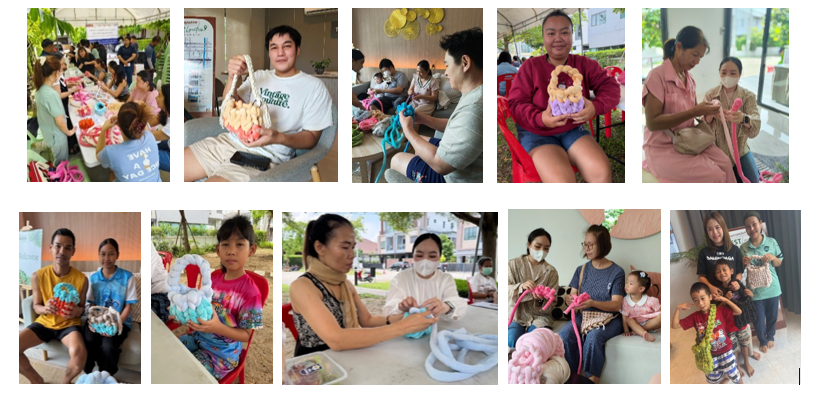
"Share Love, Share Happiness" Activity An activity inviting homeowners from Thana Habitat Pinklao - Sirindhorn, Thana Habitat Groove Pinklao – Sirindhorn, Anabuki Thana Habitat Mahajetsadabodin Bridge – Ratchaphruek, and Thana Cluster Ratchaphruek-Bang Phlu Station projects to express family love by painting "love message" fabric bags for use, promoting environmental conservation by carrying reusable bags to reduce global warming, and donating essential items to the Mirror Foundation to further assist society.
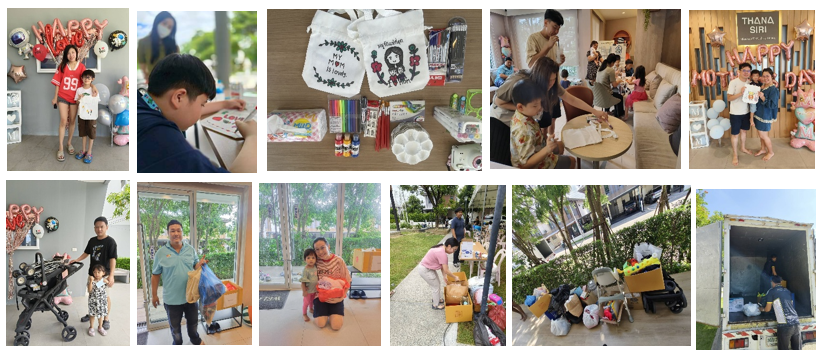
Merit-making and alms-giving activities. Activities inviting homeowners to participate in merit-making and alms-giving during various festivals throughout 2025.

Children's Day Activity 2025. Community relationship-building activities to foster good relationships and collectively create a livable community.

Activity: "Step with Dharma for 19 Hospitals, 9th Time" The charity walk-run activity is an event co-hosted by the company, which invited over 100 homeowners, business partners, employees, and their families to participate in promoting health care.
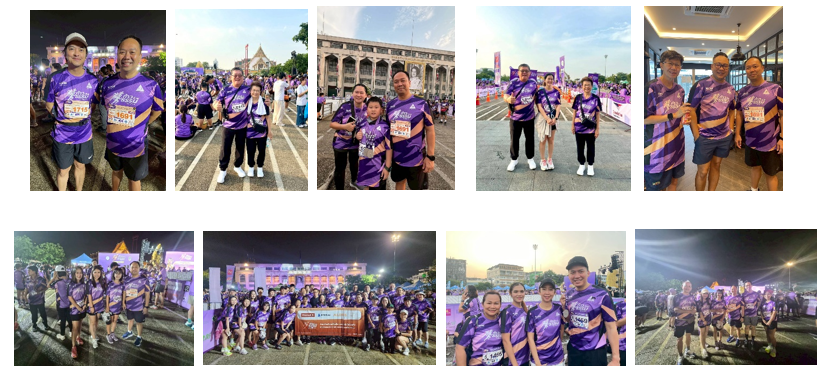
Customer safety care and facilitation within the project.
Installation of CCTV cameras to reduce potential incidents and monitor the safety of individuals and premises, as well as to serve as evidence in legal proceedings or as defense against accusations in case of unexpected events.
Using sliding gates for project entry and exit instead of boom barriers to prevent unauthorized entry and help reduce or prevent the risk of theft incidents.
There is a fire protection system (fire extinguishers are available on-site for initial response in case of unexpected incidents) and 24-hour security personnel to enhance the safety of homeowners residing within the project.
Community & Social — Plan & Guidelines
Has a Community & Social Plan
Yes
Plan Description
Collaboration in Community and Social Development
The company recognizes its responsibility towards the community and society to strengthen communities and genuinely give back to society. Therefore, the company has a policy to provide assistance and social development by cooperating in various activities with surrounding communities in areas where the company operates, as appropriate, and by responding quickly and efficiently to incidents affecting the community, society, and environment due to the company's operations. Furthermore, the company promotes environmental and social awareness and responsibility among its employees.
Development of Innovations Addressing Social Responsibility
The company prioritizes and supports innovation development to create value for the business, alongside generating benefits for customers, relevant stakeholders, as well as society and the environment. This can address various aspects of social responsibility policies mentioned above, such as natural resource and energy conservation, waste management, and control of waste discharge. The innovations employed may be at various levels, including new creations, improvements, adaptations, or modifications, to achieve more efficient or effective results than before.
Monitoring and Reviewing Social Responsibility Policies
The company recognizes the importance of continuously operating with social responsibility in mind. The company will monitor, evaluate, and review various policies that have been supported to date, and will carefully, continuously, and consistently consider future social responsibility projects. This will be done through review by assigned sub-committees and reported to the Board of Directors for acknowledgment.
Plan Areas
| Plan Area |
|---|
| Occupational health, safety, health, and quality of life |
| Water and sanitation management |
| Reducing inequality and promoting social equality |
Community & Social — Targets
Has Set Community & Social Targets
Yes
Targets
| Indicator | Target Areas | Target Year | Target Year — Description |
|---|---|---|---|
| Number of complaints from neighboring communities | 3041 · Description: Occupational health, safety, health, and quality of life | 2,025 | No complaints from neighboring communities, 100% |
Community & Social — Performance & Outcomes
Has Performance Results
Yes
Performance Description
The company emphasizes the right of communities neighboring its projects to live in a good environment, such as access to water resources, non-encroachment on residential land, and control of pollution from construction. This is achieved by strictly adhering to environmental regulations set by government agencies. Public hearings are conducted to analyze risks of violations and to receive suggestions and complaints from the community through various channels.
The company prioritizes the environment that will impact neighboring communities and society, including during the residential construction phase and operational period. This stems from care and intention from the initial project design, through studies of various aspects, for example:
-
Drainage: Drainage pipes within the project are cleared after house construction is completed and before the rainy season to prevent flooding.
-
Grease traps and wastewater treatment systems are in place to treat household wastewater before it is discharged into public drainage pipes.
-
Waste Management: The disposal of solid waste in various projects is the responsibility of government agencies. The project coordinates and monitors government officials to collect waste according to schedule.
Other Social Management
Plan & Outcomes — Introduction
Partner and Contractor Management
The company places importance on supply chain management not only to enhance operational efficiency or prevent impacts but also to increase transparency. Therefore, partners and contractors are key stakeholders with a significant role in the company's sustainable operations.
Therefore, supply chain management, to ensure the delivery of quality goods and services, adhering to good governance principles, coupled with responsibility towards the economy, society, and environment (ESG), is considered a way to enhance business opportunities and manage risks within the supply chain system, ensuring continuous operations.
The company considers its partners as business allies and an important part of the supply chain supporting the company's operations. With the company's business policy focusing on transparency, fairness, and consideration for the community, society, and environment.
The company categorizes partners into Critical Tier 1 partners and Critical Non-Tier 1 partners (who do not directly conduct business with the company). The analysis criteria are based on the trade value between them for considering both Critical Tier 1 and Critical Non-Tier 1 partners.
Supply Chain Management
The company has established a sustainable supply chain management policy, incorporating social, environmental, and governance requirements into its management processes, from selection and development to performance evaluation of partners. This aims to reduce procurement risks and human rights violations throughout the supply chain, through transparent and fair procurement processes, thereby mitigating business risks.
Throughout its business operations, the company has received excellent support from its partners. Concurrently, the company will support and enhance the operational potential of its partners to grow sustainably alongside the company. This involves communicating to partners and contractors the policy on adhering to the Partner Code of Conduct, human rights principles, and environmental standards, by integrating sustainability approaches, including social and environmental governance, into the entire supply chain management process. Furthermore, there is a mutual exchange of knowledge to develop collaborative work, ensuring the delivery of quality products to customers. Partner performance is regularly evaluated, and the evaluation results are communicated to partners for continuous improvement and development of their collaborative work.
Business Ethics for Partners
To ensure partners understand the company's expectations for sustainable operations, a Code of Business Conduct has been developed for the company's directors, executives, employees, and directly and indirectly involved partners to understand and operate ethically, covering environmental, social, and good corporate governance aspects, in line with the company's operations. This ensures that risks arising from the three dimensions of partners' operations—economic, environmental, and social—are appropriately managed, as follows:
-
Not to be involved in any situation that could lead to a conflict of interest or disrupt the company's operations.
-
Must not be involved in any situation that creates a sense of obligation to partners.
-
Treat all partners fairly, without discrimination.
-
Safeguard partner information and not use it for undue benefit.
-
Act with transparency and trustworthiness
-
Has a partner selection process that allows partners to compete on equal information and selects partners fairly under the company's partner evaluation and selection criteria.
-
Develop appropriate and fair contract formats for all parties, with a monitoring system to ensure full compliance with contract terms and to prevent corruption and misconduct at all stages of the procurement process, as well as strict adherence to contracts with partners.
Partner Code of Conduct
The company has established a Code of Conduct for its partners, requiring them to operate covering environmental, social, and governance (ESG) issues as follows:
-
Partners must comply with environmental standards related to their products and services.
-
Partners must comply with human rights requirements, such as no child labor, labor rights, and freedom of association.
-
Partners require fair employment terms and working conditions for employees, such as compensation, working hours, and termination.
-
Partners must comply with occupational health and safety requirements.
-
Partners must have business ethics requirements, such as anti-corruption and anti-unfair competition.
The company communicates these requirements to its partners through relevant company departments.
Environmentally Friendly Procurement Process (Green Procurement)
The company supports the selection of environmentally friendly products and materials by procuring eco-friendly products from certified organizations or those with eco-labels. These products are used in construction projects and at the company's headquarters to reduce greenhouse gas emissions. The company has established the following procurement process:
-
Support the implementation of the 3R principles (Reduce, Reuse, Recycle) within the organization.
-
Avoid purchasing single-use disposable products, considering the use of raw materials in components/products or packaging that can be reused.
-
Procure energy-efficient and durable products that can be used for a longer period.
-
Procure products that use clean technology and clean fuels.
-
Procure products that result in reduced water consumption.
-
Procure products that do not emit/emit fewer irritants or toxic substances during installation or use.
-
Procure products that result in no/less toxic substance production during disposal.
Company Partner Selection
The company is stringent in selecting its partners, thoroughly considering various factors such as the quality of goods or services meeting standards, business reliability, timely delivery of goods and services, as well as other supplementary factors, including whether partners conduct business sustainably in related matters, such as ethical business practices, non-violation of human rights, and compliance with laws or regulations relevant to the partner's business.
Partner Selection Criteria
-
Products/services meet requirements.
-
After-sales service is provided.
-
Credit Term period with the company
-
The results of product or service trials are satisfactory.
-
Partner's products or services are quality certified.
-
Has a business approach that considers environmental, social, and governance factors.
Partner Performance Evaluation
Regarding the performance evaluation for current partners, the company focuses on developing its business to grow alongside its partners. It sets annual partner performance evaluation standards to enhance the potential of quality products and services for sustainable delivery to customers, considering product quality, delivery, and work handover. The company will establish guidelines for evaluating partners both before and after transactions, with the Partner Management Department and Project Management Department responsible for assessing the potential of partners and contractors.
Supplier Risk Assessment
Regarding the assessment of risks arising from partners, both economic and environmental, such as risks from receiving substandard products, human rights risks, and compliance with environmental laws, criteria have been established for assessing environmental, social, and governance risks and impacts of partners, divided into 4 categories: 1. Good Corporate Governance, 2. Focus on Quality Development, 3. Scarcity, and 4. Safety.
In summary, in 2025, the company's procurement performance is as follows:
|
Implementation |
Performance in 2025 |
|
All partners |
183 partners |
|
Critical Tier 1 partners (considered based on mutual trade value) |
29 partners |
|
Critical Non-Tier1 partners who do not directly conduct business with the company (Considered based on mutual trade value) |
2 partners |
|
New partners |
52 partners |
|
New partners who passed the ESG assessment criteria |
3 partners (All are Critical Non-Tier1 partners) |
|
New partners undergo assessment before trading. With environmental, social, and governance (ESG) factors |
100% |
|
New partners acknowledge the Code of Conduct for partners. (Supplier Code of Conduct) before registration in the company's system. |
100% |
|
ESG Risk Assessment Results for Current Partners |
No risks identified from partners. |
|
On-Site ESG Audit for key partners to assess ESG performance for 4 partners annually. |
4 partners The overall average assessment result is 97%. |
Guidelines for Enhancing the Potential and Capabilities of Partners and Contractors
Currently, diverse customer demands, new legal rules and regulations, or changes in various environmental conditions affect manufacturers' competitiveness. To effectively adapt and respond to the needs of customers and relevant stakeholders, which directly impacts the company in meeting the demands of all customer groups, it is crucial to prioritize the sustainable and comprehensive development of partner capabilities. This ensures that the company's partners can control production or construction quality, deliver on time, and manage operations with good governance.
In 2025, the company organized knowledge and capability development for contractors by providing training to enhance their abilities regarding the company's construction processes and standards. This is to ensure a common understanding of the company's standards and to reduce errors in work.
Furthermore, a partner meeting is held annually, inviting partners, contractors, and other allies to attend and receive updates on the company's performance and business strategies, as well as to emphasize the organization's comprehensive strategy covering economic, social, and environmental (ESG) dimensions.
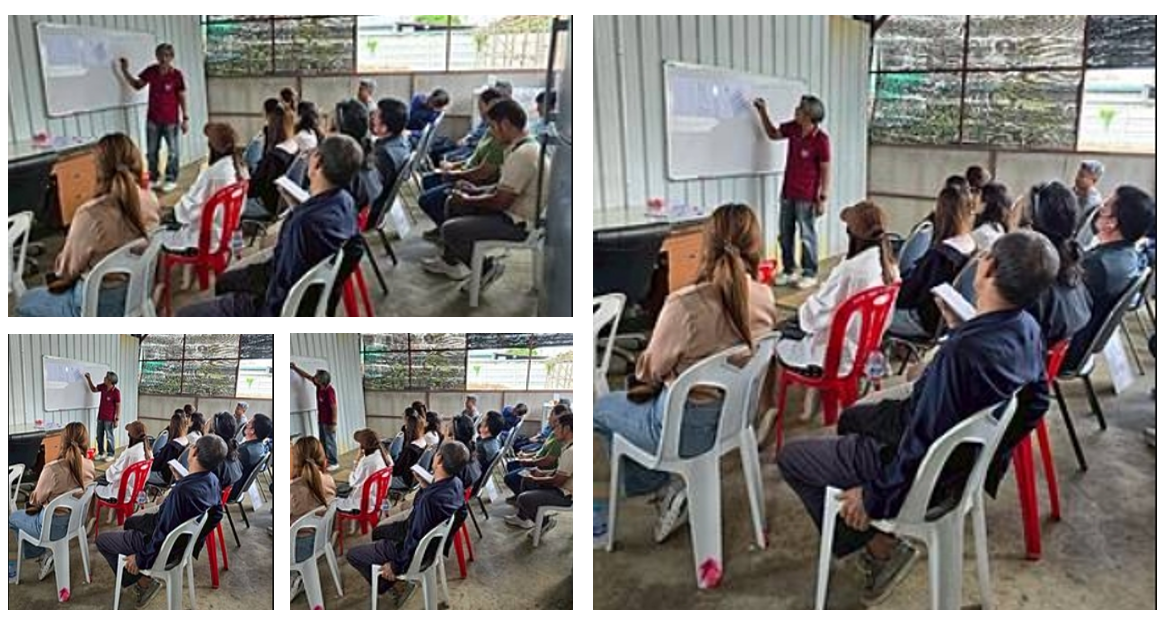
Improving the quality of life and well-being of builders
Following the signing of a Memorandum of Understanding (MOU) between the Company and the Children's Home Development Network Foundation, they jointly launched the "Building Smiles for Builders" project in 2023 to improve living conditions and hygienic lifestyles under the Building Social Impact: BSI framework, which collectively paved the way for creating livable environments. The Company and the Children's Home Development Network Foundation continued their collaborative work throughout 2025.
Plan & Outcomes — Description
Social Activities
The company has cultivated awareness and promoted volunteerism among its employees through the activities "Thana Arsa and Thana Bangpan" for the benefit of society and the environment, as follows:
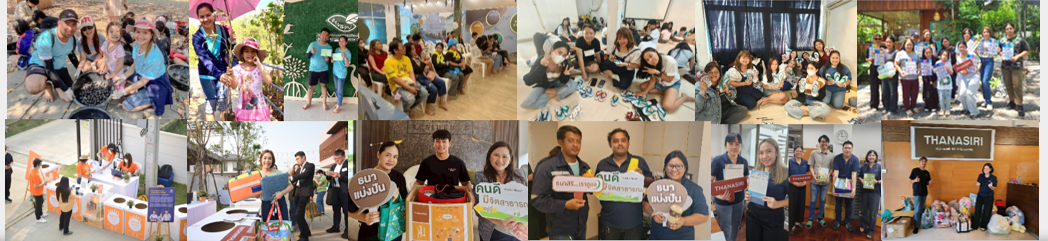
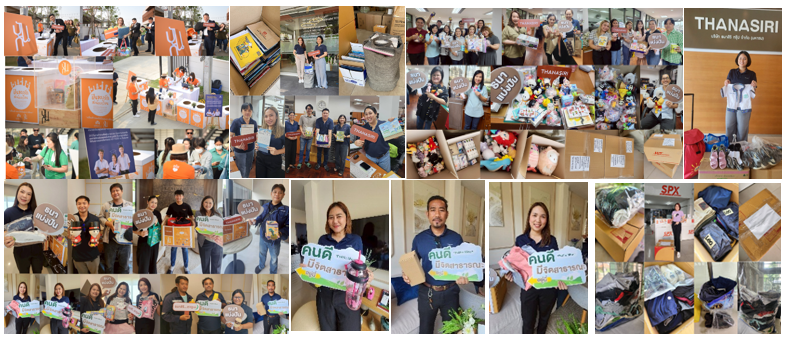

Law Violation Incidents
Law Violation Incidents
| Metric | Current Year | Previous Year | Two Years Ago |
|---|---|---|---|
| The total number of cases or incidents of significant violations of laws or regulations regarding social and human rights (Cases) | 0 | 0 | 0 |
| The total number of cases or incidents that cause significant labor disputes (Cases) | 0 | 0 | 0 |
| The total number of cases or complaints related to consumer rights violations (Cases) | 0 | 0 | 0 |
| The total number of cases or complaints related to partner rights violations (Cases) | 0 | 0 | 0 |
| The total number of cases or incidents that cause disputes with the community/society (Cases) | 0 | 0 | 0 |
| The total number of cases or incidents related to cyber security or customer data breaches (Cases) | 0 | 0 | 0 |
| The total number of cases or incidents related to safety and occupational health at work (Cases) | 0 | 0 | 0 |